
Free feet, balanced body: the minimalist approach to footwear
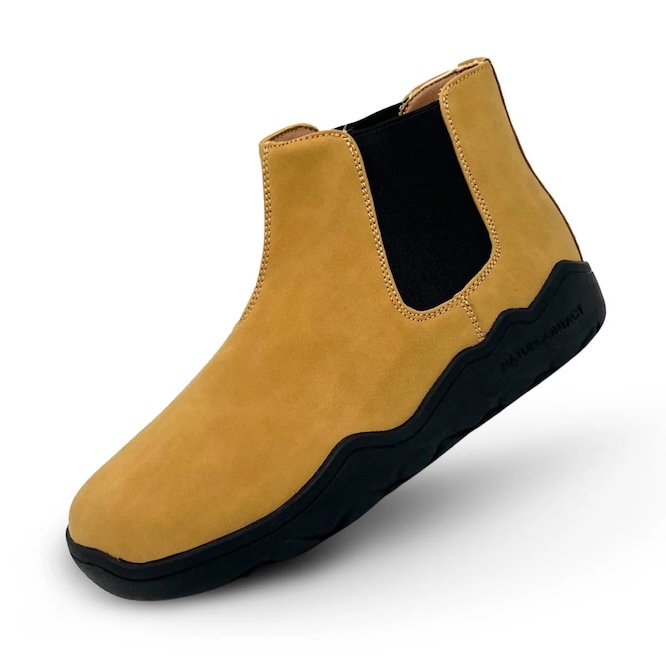
There is something paradoxical in the way we think about shoes: we consider them protection, support, solution. But for many podiatrists, physiotherapists and natural movement enthusiasts, conventional footwear is often part of the problem rather than the solution. This is the context in which the minimalist shoe philosophy operates, and one that Naturcontact embraces with a proposition designed for those who want to restore freedom and functionality to their feet.
The human foot: a neglected engineering masterpiece
The human foot is an extraordinarily complex anatomical structure. Bones, Joints, over a hundred muscles, tendons and ligaments: this entire system is designed to dynamically adapt to any type of surface, distribute weight optimally and generate the propulsion needed to walk, run and jump.
The problem is that traditional footwear interferes with this system in a systematic way.
A rigid sole prevents the foot's joints from moving freely. A raised heel progressively shortens the Achilles tendon and alters the posture of the entire kinetic chain, from foot to spine. A narrow toe box compresses the toes, limiting their stabilizing function during ground contact.
The result, for many people, is a progressively weaker, less mobile foot that becomes increasingly dependent on the artificial support of the shoe. A vicious cycle that feeds itself: the more the shoe supports, the less the foot works; the less the foot works, the more support it needs.
What makes a shoe truly minimalist
Not every shoe that calls itself minimalist actually is. There are precise technical characteristics that distinguish a genuine barefoot shoe from a product that uses the term loosely to ride a market trend.
Zero or near-zero drop. The drop is the height difference between the heel area and the toe area. In traditional running shoes it can reach 10-12 millimeters. In minimalist shoes it must be zero or at most 4 millimeters, keeping the foot in a natural position relative to the ground.
Thin and flexible sole. The thickness of the sole determines how much proprioceptive information reaches the foot from the ground. A thin sole, typically between 3 and 6 millimeters, transmits sensations that a thick sole completely muffles. Flexibility in all directions allows the foot to move naturally instead of being locked into a rigid structure.
Anatomical width. The toe box must reflect the natural shape of the foot, with enough room for the toes to splay during ground contact. A narrow or tapered toe, however aesthetically appreciated in traditional footwear, compresses the toes and limits their function.
No structural support elements. No arch supports, no rigid heel counters, no pronation control technologies: the minimalist shoe lets the foot do its own work.
The effects on overall posture
One of the most interesting aspects of barefoot shoes is that their impact is not limited to the foot. The body's kinetic chain is an interconnected system, and a change in how the foot interacts with the ground propagates upward through the ankle, knee, hip and spine.
Various physiotherapists and movement professionals report that switching to minimalist footwear, when done gradually and mindfully, can help improve overall posture, reduce certain types of lower back pain linked to the altered posture caused by raised heels, and improve stability in the lower limb joints.
These benefits are neither universal nor immediate: they depend on the individual's movement history, the correctness of the transition and the overall quality of their movement. But the potential is real and sufficiently documented to deserve serious attention.
Choosing the right shoe for your lifestyle
The barefoot shoes market today offers a variety of models covering almost every need. The choice depends on the intended use, the level of experience with minimalist footwear and personal aesthetic preferences.
For beginners, models with a slightly thicker sole and softer materials allow a more gradual transition without sacrificing the fundamental characteristics of minimalism. Over time, as the foot adapts and strengthens, it becomes possible to move to even thinner soles and more essential structures.
For daily urban use, there are models with an aesthetic closer to traditional footwear, designed for those who want the benefits of minimalism without sacrificing an appearance appropriate for professional or social settings.
For outdoor activities, trekking versions offer adequate protection from uneven terrain while maintaining the fundamental minimalist characteristics, with more durable rubber soles and water-resistant technical uppers.
© All right reserved

_(1).jpg)