Slow Travel in Northern Italy: Mountains, Villages and a Different Kind of Holiday
There is a particular kind of traveller who arrives in Italy with a list — Rome, Florence, the Amalfi Coast, perhaps Venice — and leaves having seen all of it and absorbed very little. The itinerary was flawless. The photographs are excellent. And yet something is missing.
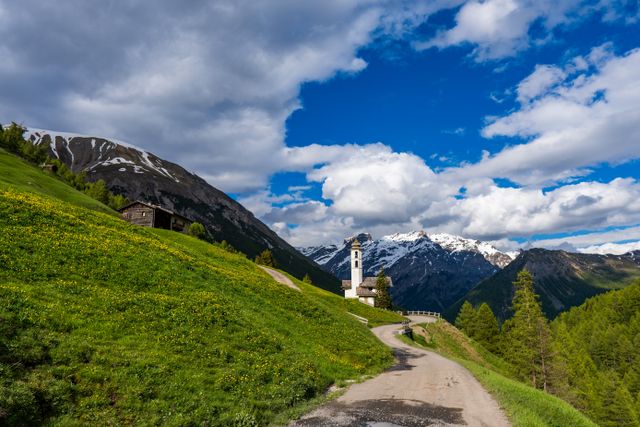
The antidote, increasingly, is the north. Specifically, the Alpine arc that stretches from the Trentino through South Tyrol toward the Veneto — a region that has never competed for attention with the postcard Italy of the south, and is better for it. Slow travel found one of its most natural homes here long before the term existed.
A Region That Doesn’t Rush You
What immediately strikes visitors to this part of Italy is that it doesn’t feel entirely Italian. The architecture leans Austrian, the signage is bilingual, the bread is dark and dense, and the villages are built for winters rather than tourists. This cultural layering — Latin, Germanic, Ladin — gives the region a character unlike anywhere else in the country.
It is also, logistically, a place that rewards careful planning. The valley systems can be disorienting for first-timers, and the distance between places that look close on a map is often greater than expected once you factor in altitude and mountain roads. For travellers who want to explore the area without spending half their holiday navigating logistics, curated Dolomites vacation packages offer itineraries built around the region’s rhythms rather than against them.
The Villages Worth Stopping In
The tendency is to head for the most famous names — Cortina d’Ampezzo, Merano, Bolzano — and these are all worth visiting. But the villages in between are where the region reveals itself most honestly.
Ortisei, in the Gardena Valley, is a town with a centuries-old tradition of wood carving; its workshops still produce pieces that have nothing to do with the souvenir market. San Candido, near the Austrian border, is small enough to walk in twenty minutes but has a Romanesque collegiate church that dates to the thirteenth century and an unhurried daily life that seems entirely indifferent to tourism. Corvara sits at the heart of the Alta Badia and functions as a genuine community first, ski resort second — a distinction that matters when you’re there in the shoulder seasons.
These are places where staying three nights instead of one changes everything.
What to Do When You’re Not Hiking
The assumption that this region is primarily for outdoor enthusiasts misses a significant part of what it offers. South Tyrol produces some of Italy’s most interesting white wines — Gewürztraminer, Pinot Grigio, Kerner — from vineyards that climb improbably steep slopes above the Adige valley. A morning spent at a small winery in the Alto Adige wine road, tasting with the producer, is as good a way to understand a place as any mountain trail.
There are also the thermal baths at Merano, the Messner Mountain Museum (actually six separate museums across the region, each in a different castle or fortress), and the Ladin cultural centres that document a language and way of life that has survived here, largely intact, for centuries. The region has a cultural density that rarely features in travel writing about it.
Eating and Drinking in the Alpine North
The food is the most immediate expression of the region’s dual identity. Canederli — bread dumplings served in broth or with butter and sage — sit alongside risotto on the same menu. Speck, the lightly smoked cured ham of South Tyrol, bears no resemblance to its industrial imitations. The cheeses produced on the high summer pastures, the masi, are seasonal and local in a way that has become rare almost everywhere else.
An evening meal in a small mountain restaurant, with a carafe of local Lagrein and no particular agenda, is one of the more quietly satisfying experiences northern Italy has to offer.
How to Plan a Slow Holiday Here Without Getting It Wrong
The most common mistake is trying to cover too much. The region rewards depth over breadth — two or three valleys explored properly rather than six glimpsed from a car window. Shoulder season, particularly late May and October, offers the best conditions: the summer crowds have either not yet arrived or have already left, the light is extraordinary, and accommodation is easier to find and more affordable.
Hiring a car is almost essential for anything off the main valley floors. And building in at least one day with no fixed plan — just a village, a trail, wherever the morning takes you — is not a luxury but a necessity.
The North Asks Something Different of You
This part of Italy doesn’t offer the obvious pleasures of the south. There is no coastline, no ancient ruins, no famous piazza to photograph at golden hour. What it offers instead is rarer: a sense of being somewhere that has not been optimised for visitors, where the pace is still set by the mountains and the seasons, and where the reward for slowing down is a version of Italy that most travellers never find.
© All right reserved