Born on June 12, 1915, in Indianola, Iowa, Priscilla Mullican would become one of Warner Bros.' most promising actresses during the golden age of American cinema. Her career, brief but intense, spanned from 1937 to 1948, leaving a legacy of performances that still deserve to be rediscovered today.
The Rise with Fred Waring
Young Priscilla could hardly have imagined that her life would change when, together with her sister Rosemary, she was discovered by bandleader Fred Waring. The two girls were performing as singers when Waring noticed them during an audition at a music publishing office. Their vocal talent and stage presence convinced the bandleader to hire them for his radio program. Priscilla immediately stood out as the group's comic, while Rosemary performed ballads. The sisters stayed with Waring for nearly five years until Hollywood came knocking.
In 1937 Warner Bros. hired Fred Waring and his orchestra for the musical Varsity Show, starring Dick Powell. Both Priscilla and Rosemary auditioned and landed significant roles in the film. The studio bought their contracts from Waring and bound them with seven-year deals. It was at this time that Priscilla definitively adopted the surname Lane, following her older sisters Lola and Rosemary who were already using it in show business.
Success with Four Daughters
1938 marked a turning point in Priscilla Lane’s career. After some light films with Wayne Morris, including Men Are Such Fools and Love Honor and Behave, came the opportunity that would define her career. Four Daughters, directed by Michael Curtiz, brought together three of the Lane sisters – Priscilla, Rosemary, and Lola – along with Gale Page, playing the four daughters of a family of musicians. The film told the romantic and professional stories of the Lemp sisters, with Priscilla as Ann, the youngest violinist.
The film was an extraordinary success with both audiences and critics. Four Daughters received five Academy Award nominations in 1939, including Best Picture. Other nominations included Best Director for Michael Curtiz, Best Screenplay, Best Sound, and Best Supporting Actor for John Garfield in his film debut. Despite the prestigious nominations, the film did not win any Oscars that night but firmly launched Priscilla Lane’s career and established John Garfield as one of Hollywood’s new stars.
The success of Four Daughters generated two sequels: Four Wives in 1939 and Four Mothers in 1941, as well as Daughters Courageous, also from 1939, which reunited the same cast in a different story. Priscilla participated in all these projects, consolidating her image as the fresh and spontaneous girl next door.
Hitchcock and the Greats of Cinema
In 1942 Priscilla Lane had the chance to work with Alfred Hitchcock in Saboteur. The master of suspense, however, was not enthusiastic about the choice of lead actors, imposed by Universal Studios. Hitchcock felt Lane was too much of a "girl next door" for the heroine Patricia Martin and would have preferred different actresses. Despite the director’s reservations, when the film was released, critics appreciated Priscilla’s performance, while some doubts were expressed about Hitchcock reusing too many elements from his previous works in this wartime thriller.
The previous year she had acted alongside James Cagney and Humphrey Bogart in The Roaring Twenties, a gangster movie set during Prohibition that became one of her biggest commercial successes. In 1944 came Arsenic and Old Lace, the dark comedy directed by Frank Capra in which she played Elaine Harper, the fiancée and later wife of Cary Grant’s character. The film was shot in 1942 but its release was delayed until 1944 due to contractual agreements linked to the still-successful Broadway play.
Farewell to Cinema
Priscilla Lane never received a personal Oscar nomination despite the quality of her performances and the success of the films she appeared in. The British magazine Picturegoer, which closely followed the Lane sisters’ careers, repeatedly expressed doubts about Warner Bros.’ management of Priscilla’s career. In June 1940 the magazine wondered why the actress was still "knocking on the door of great stardom," believing the studio often used her as a supporting player to actors like John Garfield and James Cagney without giving her more substantial roles.
In 1942, after completing Arsenic and Old Lace, Priscilla retired from acting. She had married Joseph Howard, a lieutenant in the Army Air Corps, and decided to follow him across the United States as he was transferred from one military base to another during the war. During this time, she often performed in shows for the troops, putting her talent at the service of the soldiers.
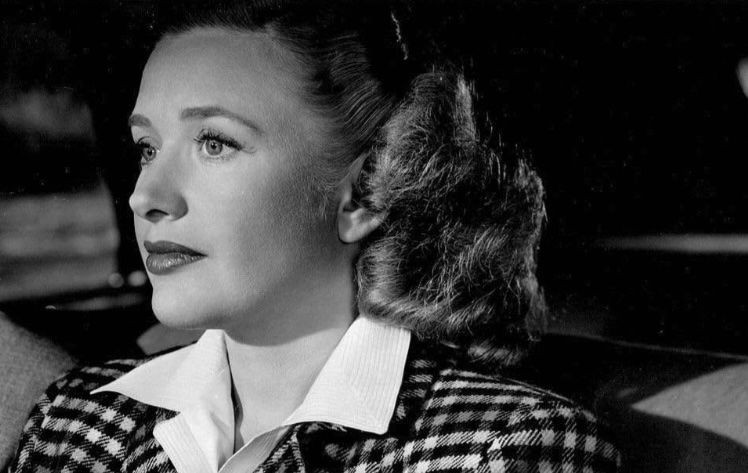
She attempted a brief comeback in 1947 with Fun on a Weekend, alongside Eddie Bracken, and in 1948 with the film noir Bodyguard, opposite Lawrence Tierney. During an interview for Bodyguard, she said, "I didn’t realize how much I missed acting until I came back. I love this work and hope to make many, many more films." However, Bodyguard proved to be her last film appearance. A much-anticipated contract with RKO Studios never materialized.
In 1958 Priscilla briefly returned to show business with The Priscilla Lane Show, a local television program broadcast in Boston where she interviewed celebrities visiting the area. The experience lasted about a year before family commitments convinced her to leave the artistic career for good.
Priscilla Lane passed away on April 4, 1995, in a nursing home in Andover, Massachusetts, at the age of 79, due to lung cancer and chronic heart failure. Her cinematic legacy remains preserved in the classics of the 1930s and 1940s, a testament to an era when Hollywood cinema knew how to create stars capable of embodying the innocence and freshness of America in those years.

.jpg)
.jpg)