
Movie Review Exhibiting Forgiveness, broken present with André Holland
Check out the review of Exhibiting Forgiveness, the movie starring André Holland, Andra Day: plot, cast, critics
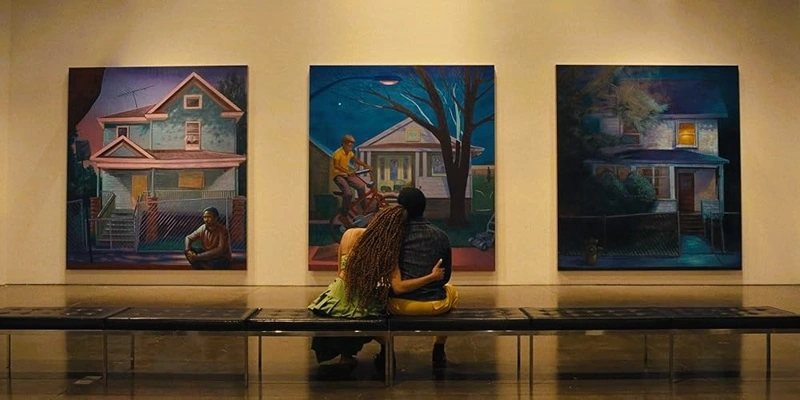
La'Ron
(John Earl Jelks) cleans rims for the owner of a liquor store, drinks what's
left of water from bottles thrown in the trash: when a thief beats the owner,
he defends him, even though he is later beaten by the assailant.
His
confusing life is different from that of his son Tarrell Rodin (André Holland),
a well-known American painter who lives with his wife, singer-songwriter Aisha
(Andra Day), and young son Jermaine. Tarrell's artwork delves into the anguish
of his youth, almost oblivious to his father. An unexpected visit from La'Ron -
a recovering drug addict - throws him into a state of confusion; La'Ron
desperately tries to reconcile with him.
The film Exhibiting Forgiveness - released in the United States - suffers from a certain slowness, probably due to the directorial sharpness of Titus Kaphar in his debut behind the camera: Kaphar paints, reconfigures and regenerates history to include African-American subjects. His works include Behind the Myth of Benevolence and The Vesper Project. Kaphar almost seems to want to recreate painterly stillness in moving images, creating work that is at times alienating.
What seem
like descriptive pauses - like playing with an old friend in a pool without
water - take on additional meaning here, almost a projection of one's own
thoughts: in this case, Tarrell's. The contact with his father is the detonator
of a gift that was considered perfect and is now falling apart. When Tarrell
jerks awake and hits the wall, he relives the anguish of his past.
Present and past in the display of forgiveness
When La'Ron
confesses his past and why he hasn't dated him since adolescence, Tarrell
directs him on camera, which adds even more empathy to a long, powerful scene.
A flashback shows young Tarrell following his father around, pushing a lawn
mower to scrape together a few odd jobs, or picking up trash in a dump, until a
nail is driven into young Tarrell's foot.
If
forgiveness is allowed, the consequences that come with it are not, and you
have to get used to them. Tarrell understands this and refuses to compromise.
The nail
driven into his foot and left untreated by his father is still the mark of the
past that cannot be forgotten. The final scene, in which Tarrell intervenes in
his painting of a boy pushing a lawnmower, sheds light on the disproportionate
nature of forgiveness.
© All rights reserved
You Might Be Interested
Michael: review of the anticipated biopic
Director Antoine Fuqua changes lanes to steer the King of Pop-prestige project amidst high expectations
Christian Bale & Jesse Buckley in The Bride! film review
Christian Bale and Jesse Buckley lead Maggie Gyllenhaal’s dynamic vison of monstrousness
Crime 101 review: a stylish and detailed heist film
Chris Hemsworth, Mark Ruffalo, & Halle Berry in a refined ode to classic crime thrillers that rewards your attention
Review of The Housemaid: Sydney Sweeney stars in new thriller
The Housemaid boasts shocking twists under a poker face, but shows its’ cards too early

Avatar: Fire and Ash review: James Cameron is back for box-office blood
The Oscar-winning filmmaker’s latest wrestles between mesmerizing optics and deep storytelling, tiring itself out.
Zootopia 2 review: Disney Animation’s sequel pushes visual boundaries
Proving the first film was no one-trick pony, Disney grabs the bull by the horns for a second amusing animal adventure
-Bufo-(credit)-Max-Smeds.jpg)
Review of Shadowland, the documentary about Richard Stanley
Directed by Otso Tiainen, in competition at the Torino Film Festival
Hamnet review: Metamorphosis in the life of Shakespeare, with Paul Mescal, Jessie Buckley
To be or not to be; director Chloé Zhao answers yes with the story that conceived Shakespeare's seminal Hamlet