
John Schlesinger, the legacy of British cinema
John Schlesinger, February 16, 1926
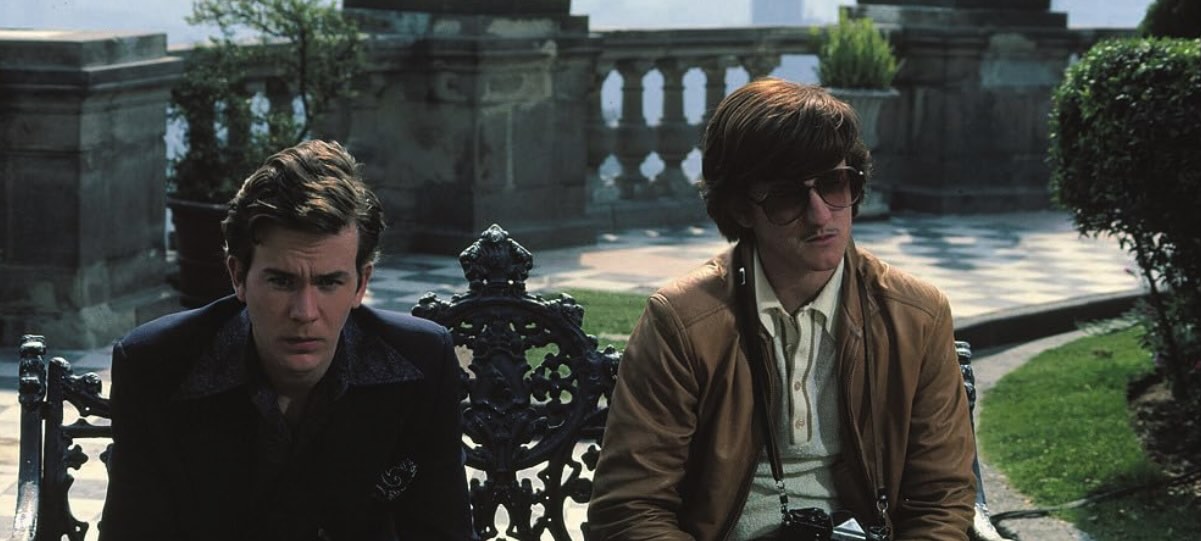
John Richard Schlesinger was born in London on February 16, 1926. After attending Oxford University, he began his career in the entertainment industry as an actor, appearing in films such as Oh... Rosalinda! and The Battle of the River Plate. In 1957, he transitioned to directing at the BBC, producing over twenty documentaries. Among these, Terminus (1961), which documents life at London’s Waterloo Station, received recognition at the Venice Film Festival and from the British Academy of Film and Theatre Arts, marking the start of his career as a director.
During the 1960s, Schlesinger directed his first British feature films, including A Kind of Loving (1962) and Billy Liar (1963). The film Darling (1965), starring Julie Christie, earned him his first Academy Award nomination, establishing his international presence. In 1967, he directed Christie again in Far from the Madding Crowd, an adaptation of Thomas Hardy’s novel, further strengthening his reputation in the European film scene.
His move to American cinema came with Midnight Cowboy (1969), which tells the story of two marginalized men in New York, played by Dustin Hoffman and Jon Voight. The film, initially rated X for its raw depiction, won the Academy Award for Best Picture. Schlesinger received the Oscar for Best Director, while Waldo Salt won for the screenplay.
In 1971, he directed Sunday Bloody Sunday, a film addressing homosexuality with an unconventional perspective for its time, earning another Oscar nomination. This thematic choice became a hallmark of his directing style, characterized by bringing socially and culturally controversial topics into mainstream cinema.
His filmography continued with titles such as The Day of the Locust (1975), Marathon Man (1976), featuring Dustin Hoffman and Laurence Olivier, and Madame Sousatzka (1988). In the 1990s, he directed Pacific Heights (1990), a thriller starring Melanie Griffith, and Cold Comfort Farm (1995), an adaptation of Stella Gibbons’ novel with Kate Beckinsale.
Alongside his film career, Schlesinger remained active in theater, directing several productions and serving as associate director of the National Theatre in London. In 1970, he was appointed Commander of the Order of the British Empire for his contributions to cinema.
Among his later works are Eye for an Eye (1996), starring Sally Field, and The Next Best Thing (2000), featuring Madonna and Rupert Everett. After suffering a stroke in 2000, his career ended, and Schlesinger died on July 25, 2003, in Palm Springs, California.
His work is characterized by a realistic and direct approach, with particular attention to social issues often overlooked. His influence on 1960s and 1970s cinema is recognized as significant, leaving a lasting impact on contemporary directing.
© All rights reserved
You Might Be Interested
Sela Ward: A Career Between Television and Film
Born July 11
Sofía Vergara: Career and Recent Developments
Born July 10, 1972, Barranquilla, Colombia

Action Movie Above & Below, the Shark Attack with Antonio Banderas, Laura Marano - Plot
Above & Below: plot, cast, trailer and release of the thriller with Antonio Banderas and Laura Marano.
Tom Hanks: Seventy Years of American Cinema
Born July 9, 1956, in Concord, California

Dune: Part Three: Sequel Updates - Plot and New Trailer
Discover Dune Part Three, the film starring Timothee Chalamet, Zendaya, and Rebecca Ferguson. Plot, cast, and release da
Marty Feldman: The Wild Eye of British Comedy
Born July 8, 1934, in London

The Wrong Girls: Codependent Friends with Kristen Stewart, Alia Shawkat, Seth Rogen - Plot
Discover The Wrong Girls, the comedy movie with Kristen Stewart, Seth Rogen: plot, cast
George Cukor: Master of Classical Hollywood Direction
Born July 7, 1899