
Arabella Oz interview, Mallory's Ghost Director
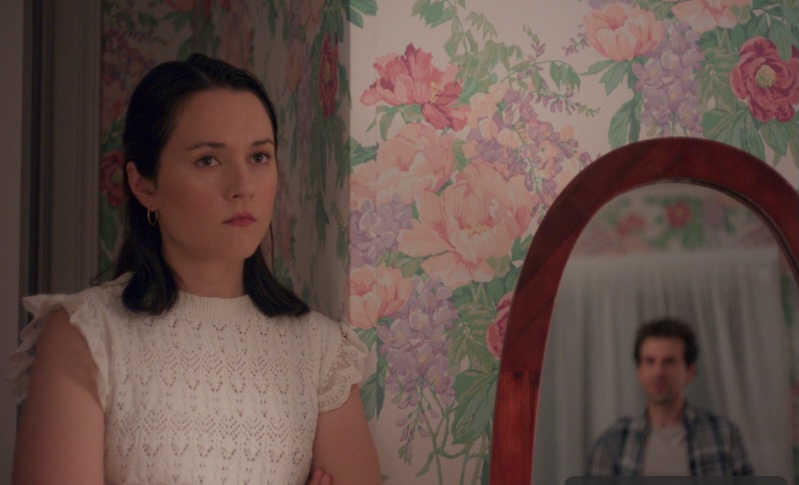
Can you briefly describe the plot of Mallory’s Ghost and the main themes addressed in the film?
Mallory’s Ghost is about that familiar feeling when you’re dating someone and you can’t stop comparing yourself to their ex. It’s a story that aims to peel back the layers of jealousy until it reveals the core truth about what jealousy actually is and where it might lead.
The story mostly takes place on the beautiful coast of Maine, where Mallory follows her playwright boyfriend Sam on an inspiring retreat. As soon as she gets there, however, she learns he previously took this same trip with his gorgeous muse of an ex-girlfriend, Louise. This is particularly painful for Mallory, since she feels especially lacking in all the areas Louise shines. She quietly longs to be creatively expressed, but doesn’t even know where to start. As this comparison consumes her mind, she begins to be haunted by a figure in the shadows of the estate… leading her on a psycho-spiritual, reality-bending journey.
What was the idea or source of inspiration behind the film?
I actually took a trip with a boyfriend about a decade ago and I was so consumed by the fact that he had travelled to that same place with a previous girlfriend that I started to imagine what it would be like if she were literally haunting me. The concept fascinated me, especially since I noticed this fixation was a bit of a pattern of mine, so I tried to make sense of it through story.
I worked on many different iterations of the script over the years as I was also becoming a licensed psychotherapist, so my exploration became increasingly psychological. I was tickled especially by exploring the relationship between the women — the bond between a woman and the woman she is threatened by — and how it’s really just a kind of distorted projection of admiration.
How did you work to develop the atmosphere and narrative tone of the film, especially considering its more disturbing or mysterious elements?
The tone was something we really grappled with as a team through writing, production and editing — and it evolved in every stage. Even though the film borrows from genres of comedy, thriller, and magical realism to serve the emotional experience of jealousy, the tone of the film was its own living thing. It always existed as its own unique fingerprint that we were more in a state of discovery around than control.
Perhaps because I was working on the script while pursuing the more serious, grounded, very meaningful work of becoming a therapist, I would often turn to the script to enter a world that was more whimsical, light and strange.
My husband and collaborator Nick Canellakis workshopped a lot of scenes with me (as well as co-directing, co-editing, and composing the score) and we pulled from our dynamic as well as our experience with comedy to develop the rapport of the characters. We were inspired by the screwball comedies of Frank Capra as well as certain Woody Allen movies like Manhattan Murder Mystery and Alice.
How do the characters in Mallory's Ghost reflect or explore contemporary or universal issues?
The film works to dig beneath the clichés of female rivalry to find the reservoirs of inspiration, admiration, and even potential love that tend to live underneath. It also explores how easily people externalize inner conflicts — projecting them onto relationships, strangers, the world around them — when the real work is really internal.
These themes feel especially resonant in the age of social media, where projections run rampant with manicured images and minimal context. Mallory does her fair share of Instagram stalking, and that digital vortex she creates for herself — where she feels like she barely exists — drains her creative energy completely. The journey of the film is about reclaiming that. And in a broader sense, it's a film about female competition that ends up not being about that at all. Instead of rivalry driving drama, it becomes a window for genuine growth — something I think will resonate with anyone who's been caught inside those dynamics.
What were the most significant challenges during the production of the film?
The hardest part of making a film this size is how many roles everyone has to juggle at once — it's difficult to feel fully grounded in any of them. Our hardest day was filming in the attic in July. We were trying to create this elaborate, dreamy, smoky blue world up there, but it was boiling hot and we were too understaffed to pull it off efficiently. We got to lunch — halfway through the day — without having rolled the camera once. I slipped away and sat quietly running through the scenarios: what if we had to cut the scene entirely, figure it out in pickups, or accept that we were falling so far behind we might not finish the film? Then our cinematographer Jeff Griecci found me and calmly said, 'Let's just keep going and see how much we can get.' We ended up miraculously getting everything we needed that day — including the emotional apex of the film. The stress and bewilderment all came out in my tears in that scene! Every time something came together after nearly falling apart, it was this rush of faith and adrenaline. Making the film felt like one long trust fall broken up by an endless series of tiny, tedious tasks.
How do you see your work as a director evolving, and what future projects do you have in the pipeline?
I'm currently developing several scripts, but the one I'm most focused on dives even deeper into female dynamics. I want to trace the full arc of a friendship: the falling-in-love phase, the kind of rupture where no one is really wrong but everyone ends up hurt. The same way I tried to dismantle jealousy from every angle in this film, I want to do that with friendship. That's really the through-line of everything I'm working on — this desire to get to the bottom of “what is this thing, actually?”
I'm incredibly excited to keep honing my craft as a writer and director — to develop a real fluency with the medium that can result in genuine insight. I believe deeply in cinema's ability to mirror a healing journey, and that's the space I want to keep working in.
Is there a particular message or reflection that you hope audiences will take away with them after watching Mallory's Ghost?
I think if someone left Mallory's Ghost asking themselves, "What is actually happening when I spiral into a comparison tailspin — what is it telling me about my relationship to my own life-force right now?" — then the film has done its job.
© All rights reserved
You Might Be Interested
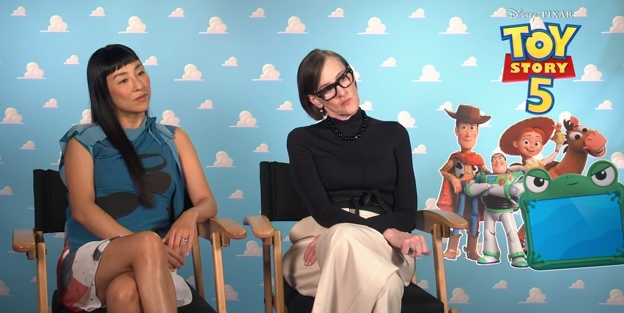
Toy Story 5, Joan Cusack and Greta Gerwig interview
The statements of Joan Cusack and Greta Gerwig
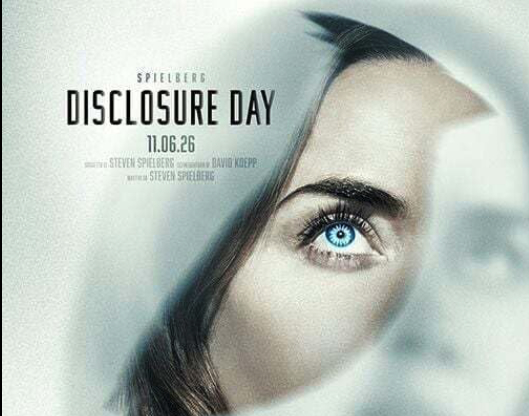
Disclosure Day, Steven Spielberg and and Colman Domingo interview
The statements of Steven Spielberg and Colman Domingo
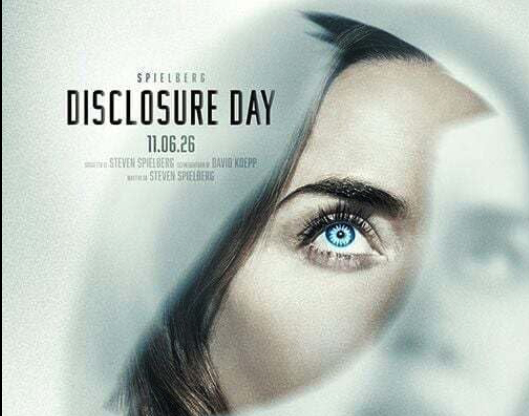
Disclosure Day, Emily Blunt interview
The statements of Emily Blunt and Josh O’Connor

Cape Fear, LA Premiere, Amy Adams, Javier Bardem and Lily Collias interview
The statements of Amy Adams, Javier Bardem and Lily Collias - Streaming starting June 5

Natalie Moon Interview
In the cast of *Backrooms*, directed by Kane Parsons

Scary Movie, Olivia Rose Keegan interview
The statements of Olivia Rose Keegan

Scary Movie, Kim Wayans interview
The statements of Kim Wayans

Scary Movie, Anna Faris interview
The statements of Anna Faris