
Bayan Joonam Interview: Phoenix Jones Documentary
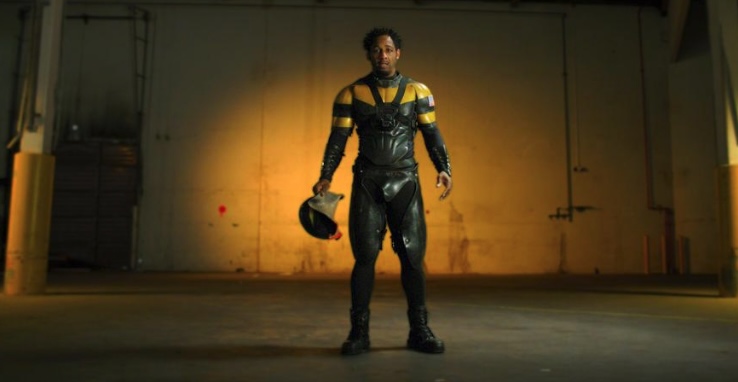
What were the main challenges in adapting the almost superheroic story of Phoenix Jones?
The biggest challenge was resisting the temptation to turn the story into a traditional superhero narrative. When you first encounter the legend of Phoenix Jones, it almost writes itself like a comic book. But then there’s the person behind the mask, Benjamin Fodor. And Benjamin Fodor's actions often complicate and contradict the symbol that Phoenix Jones represented. The challenge was holding both things at once. The myth he created and the reality of the person inside it.
Why did you choose him as your subject?
I was drawn to Phoenix because, out of the entire subculture of real-life superheroes, he was by far the most legitimate.
There are people all over the country who put on costumes and patrol their neighborhoods, but most of them function more as people who help Grandma’s cross the road or do random acts of kindness. Don’t get me wrong, that is good work. But Phoenix is different. He was not afraid to break up fights or confront drug dealers, and he did it all on camera.
But the longer I followed him, the more the story shifted from crime to psychology. The question became: what circumstances produce a person who believes they alone can stop all the crimes in a city?
How do the visual and stylistic elements of the documentary reflect Phoenix himself?
The visual language of the film combines three elements: superhero imagery, investigative documentary, and single-camera vérité. In many ways, those elements mirror the three acts of Phoenix’s story.
At the top of the film, it leans heavily into superhero imagery. We frame moments almost as if we’re inside Phoenix’s imagination, presenting events the way he might see them in his own mind. The suit, the patrols, and the way those scenes are shot lean into the mythology he created around himself. The goal was to blur the lines of reality so the audience would question if they’re watching a scripted superhero film or a documentary.
The second act shifts into a more investigative tone. As the mythology begins to unravel, the film starts examining the gap between the legend of Phoenix Jones and the reality of Benjamin Fodor.
By the third act, the film largely lives in single-camera vérité as we follow Phoenix patrolling the CHOP zone during the unrest in Seattle. The simplicity of a single camera lends itself to a certain level of honesty. The audience is simply there with him as events unfold.
That progression allowed the visual style to evolve alongside the story, moving from myth, to investigation, to the reality of what it actually means to live inside a self-created myth.
What themes or messages did you want the film to convey?
Every era produces a superhero that reflects the moment. Superman reflected the anxieties of the Great Depression. Captain America reflected the moral clarity of World War II. The X-Men reflected the civil rights movement.
Phoenix Jones reflects something about the moment we’re living in now. We live in a time of collapsing institutional trust, viral justice, and erosion of objective truth. In that environment, a self-created superhero who builds his mythology in real time feels strangely appropriate.
The film isn’t trying to condemn or celebrate him. It’s trying to understand what he represents. I hope audiences walk away from the film wondering what it truly means to be a hero in today's world.
Could you share any anecdotes or interesting moments from the filming?
This didn’t make it into the film, but during the CHOP protests the producer of the film, Claire, and I actually got caught up in the fray.
At one point the police line charged and Claire was knocked to the ground. I turned around and saw an officer raising his baton to strike her, so I ran over and jumped on top of her to take the blow myself. The rest of the scuffle is a bit of a blur, but it was all filmed. We both ended up spending the night in jail.
At the time I was producing a show with CNN, so I actually had to call into our weekly development meeting from jail.
The funny part is that a few years later Claire and I ended up getting married. I credit this film, and that night in particular, with being the moment we realized we were right for each other.
Looking ahead, what projects or developments would you like to explore in television or film?
I’m currently filming a project that is very personal to me about the disappearance of my grandfather during the 1979 Iranian Revolution. He was a general in the Shah’s army and a member of the Baháʼí Faith.
That moment in history is incredibly important because the origins of the modern conflict between the United States and Iran can be traced back to the events of that revolution. By telling my grandfather’s story, I’m hoping to offer a more human lens into a conflict that is usually discussed only through geopolitics.
© All rights reserved
You Might Be Interested
Toy Story 5, Joan Cusack and Greta Gerwig interview
The statements of Joan Cusack and Greta Gerwig
Disclosure Day, Steven Spielberg and and Colman Domingo interview
The statements of Steven Spielberg and Colman Domingo
Disclosure Day, Emily Blunt interview
The statements of Emily Blunt and Josh O’Connor

Cape Fear, LA Premiere, Amy Adams, Javier Bardem and Lily Collias interview
The statements of Amy Adams, Javier Bardem and Lily Collias - Streaming starting June 5

Natalie Moon Interview
In the cast of *Backrooms*, directed by Kane Parsons

Scary Movie, Olivia Rose Keegan interview
The statements of Olivia Rose Keegan

Scary Movie, Kim Wayans interview
The statements of Kim Wayans

Scary Movie, Anna Faris interview
The statements of Anna Faris