
Frank E. Flowers on The Bluff: Exclusive Interview & Behind the Scenes
Discover The Bluff, the drama movie with Priyanka Chopra Jonas, Karl Urban, Ismael Cruz Cordova. Plot, cast, interview
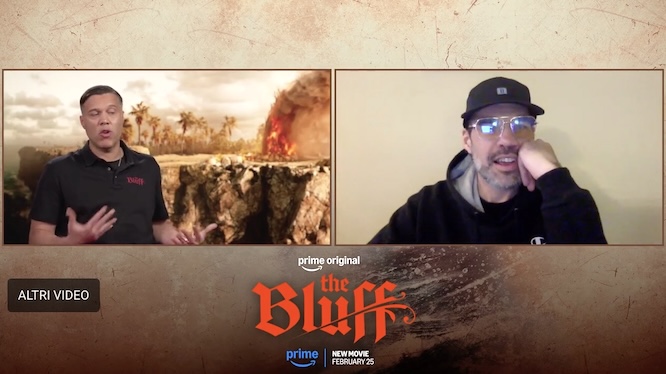
Director and co-writer from The Cayman Islands, Frank E. Flowers, discusses The Bluff.
We share some similar qualities. We were both raised in the West Indies. I grew up on Montserrat, and then Nevis, then America. So, when I learned about your background going into this film, it made me that much more confident that it was going to be quality.
I appreciate that, man. Love for the island boys. And that was a big part of what this was, right? This was the first pirate movie told from a Caribbean perspective, so that was in the DNA right from the beginning, you know. We wanted to really infuse that.
Great camera work in the whole movie. That home invasion scene… exceptional camera work. I mean, two minutes where you guys don't cut, it really creates this omnipotent fear for the viewer. How important was it in this scene to craft that stage of dread for the characters as well as the viewer?
It was incredible. Shout out to our cinematographer, Greg Baldi, who shot both Extraction films, and you know, those movies have some epic oners [long, one-take camera shots]. They go from the train, to the prisons, and then back to the jeep. I mean, it's bananas. For us, you know, we weren't trying to show off. We were like, "Let's just stay with this character and this fear”, right? Let's watch Priyanka (Chopra Jonas), “Ercell”, “Bloody Mary”, get…get the fear! Let it land that the stakes are real, that we're going to go there with this movie. And, so, we came up with that concept of, you know, “we're going to stay with her for this first attack, for as long as we can”, and “we're going to actually feel the fear with her”. So that was a big part of it. You know, you pick up on that idea of this omnipotent presence, but this idea of, like, she's going to—she can't fight them all at once, right? She's got to bide her time. She's going to try, and she's going to get beat up for it. And then, she's going to have to start using her skills, using her tactical skills.
How long did it take to get that scene right in your eyes?
So I actually got to run that sequence a bunch of times, long before we even had a crew, before I went to set. So, it was one of those that, you know, I—I feel like I knew very intricately before we even started filming. And it was just a blessing to have all that tech and all those toys to be able to really build my confidence of, “can this work as a one-er?” Because, you know, I hate when someone does a one-er for, you know, to be pretentious or be like, "Oh, I just don't want to..." No, no, no. We want it to be that it could only be told that way, so we really mined it. And, you know, the two guys who attack her, they're not stunt performers. Stunt performing, as you know, is a whole other level of skill. These were two actors who were the nicest guys in the world but came in for eight weeks every single day to learn the scrappiness and the rawness of that fight.
Audiences gravitate towards narratives of protecting family, especially children. Here we also see a redemption aspect for Ercell. She's forced to make right by battling not just to protect, but to ensure that associates from past lives, past deeds, never pose a threat again. There's one scene where Captain Connor (Karl Urban) says, to her family, "We're not the ones who should be afraid of", and there's truth in those words. If Ercell hadn't lived how she lived, that situation wouldn't be happening. You're combining two narrative themes into one story. How did you strike a balance making that fight for survival relatable and sympathetic, yet parallel to Ercell and her family facing a checkered past that's come home to roost?
The set design, especially the costume design, I think demonstrates a lot of detail and consideration. It's understated, minimal, grounded. It's far less romanticized and imaginative than its’ counterpart films of the genre. They're constant visual reinforcements that The Bluff ain’t some family fun, summer blockbuster. This is raw pillaging and plundering, hard but also beautiful living. Where did the choice for the aesthetics develop and how did they materialize when making the film?
Well, I gotta shout out my Jamaican sister and costume designer, Antoinette Messam. You know, she, like everybody else in this movie, went deep. You know, she was up in Toronto going through the archives, you know, going through Caribbean sketches from the time and looks and, you know, we made a conscious decision of, you know, making this, you know, pirates, they were tactical. They weren't flamboyant. The best killers from all over the world come together in a ship, right? They're not moving with a bunch of flowery things, you know? They need armor. They need camouflage, right? They're a strike force.
Pirates of the Caribbean. You got Peter Pan. Old Errol Flynn movies. These had whimsical tones, were romantic. What does The Bluff bring to the table that separates it from the pack?
I think first and foremost, you got a home invasion thriller, except it's on an island, so you're blowing it up, right? You got an extreme eye to authenticity, to violence, to this visceral, raw, emotional journey. But then you put the team at AGBO and the Russo’s on it, so you know you're gonna get that big action, but you're gonna get something that's grounded, and that's emotional. I look at this, and I go, “not only is this the first pirate film told from a Caribbean perspective, but you're gonna be able to go through this like, “how would I survive?”
Every fight, there's no flamboyance. It's raw. I'd go into the gym with the guys and the girls actually, and we'd go in, we'd run the fight, and they'd be like, “oh, this would look cool on camera”. Then I say, “why am I gonna do this, when I can pull this guy's hair and bite his hand?” They're like, “oh, right”. I said, “that's the fight”. Once everybody has jumped on that, you see what you get. I'm excited for audiences to be like “Yo! That was hard, bro. That was raw, but also, I kind of surprisingly, low key felt something”. So, to me, I think that's just something we haven't really seen in the pirate genre. Also, it’s set two-hundred years later than some of those other films. You're right at that moment where there’s now revolvers, and different kind of weapons are coming into the picture. You're gonna see some pirates doing some wildness. Karl’s got a 20-round revolver! Bananas!
Frank, thank you for the time. Congratulations on the great picture and the best of success to you.
Yeah man, maximum respect, big up!
© All rights reserved
You Might Be Interested
.jpg)
Interview with Richard Gadd
Richard Gadd participated in Italian Global Series
Interview with Natasha Lyonne
Natasha Lyonne participated in the Italian Global Series in Riccione
Interview with David Boreanaz: From Buffy the Vampire Slayer to Angel, Bones, and SEAL Team
David Boreanaz looks back on his career from Buffy the Vampire Slayer to Angel, Bones, and SEAL Team.

60 Years of Star Trek Awards Ceremony: Interview with Celia Rose, Jeri Ryan, Rebecca Romijn, Anson Mount, Nicholas Meyer
.jpg)
Interview with David W. Zucker and Nicholas Meyer, the evolution of international serialization
David W. Zucker and Nicholas Meyer: The Evolution of Seriality: Writing, Production, and Worldbuilding
Inside American TV Series, interview with David E. Zucker and Steve Stark
Italian Global Series is on second edition

Minions & Monsters, cast interview: Jeff Bridges, Zoey Deutch and Jesse Eisenberg
Releasing on July 1, 2026

Moana, cast interview: Dwayne Johnson, Catherine Laga’aia
Releasing on August 19, 2026