
Carmen Miranda, Latin Icon of Hollywood
Carmen Miranda was born on February 9, 1909
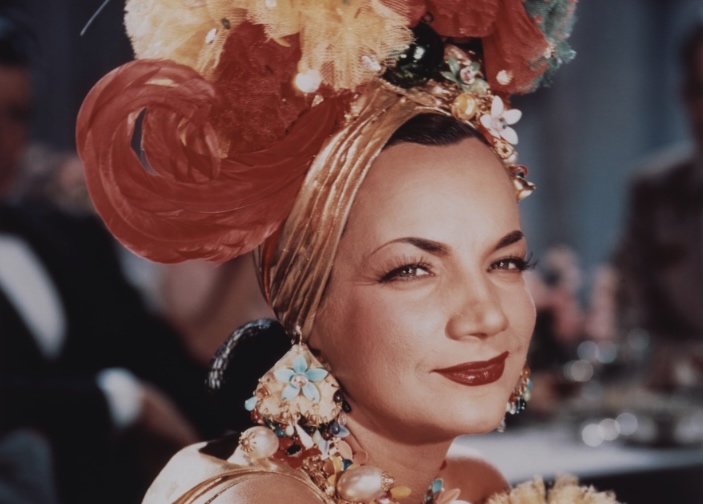
Maria do Carmo Miranda da Cunha, known as Carmen Miranda, was born on February 9, 1909. Her career began in Brazil, where in the 1930s she established herself as one of the leading samba performers. Her musical debut dates back to 1929 with her first recordings alongside composer Josué de Barros, while the 1930 song "Taí (Pra Você Gostar de Mim)" helped solidify her fame in the Brazilian music scene.
Before moving to the United States, Miranda appeared in several Brazilian film productions, including "Hello, Hello Brazil!" and "Hello, Hello, Carnival!", which reflect the country's musical and festive culture. In 1939, she starred in "Banana da Terra," a film in which she wore for the first time the "baiana" costume, inspired by the traditional Afro-Brazilian attire of Bahia, featuring the distinctive turban that would become an integral part of her public image.
Her international career began when theater producer Lee Shubert noticed her during a performance in Rio de Janeiro and offered her a contract for the show "The Streets of Paris." In 1940, she made her Hollywood debut with "Down Argentine Way," alongside Don Ameche and Betty Grable. Her accent and exotic costumes quickly became defining elements of her screen persona.
In the United States, Miranda quickly gained recognition: in 1941, she became the first Latin American star to leave hand and foot prints at Grauman’s Chinese Theatre and the first South American to receive a star on the Hollywood Walk of Fame. In 1943, she appeared in "The Gang’s All Here," directed by Busby Berkeley, where she wore the famous fruit hats that became her most recognizable symbol.
The year 1945 marked the peak of her film career, with earnings that made her the highest-paid actress in the United States. Although she never won an Oscar, two of her most notable films, "Down Argentine Way" and "The Gang’s All Here," were included in the National Film Registry of the Library of Congress for their historical and cultural significance.
After World War II, her presence on the big screen declined. Films produced by Fox began to be shot in black and white, signaling a decrease in interest in her figure and Latin culture in general. In 1946, Miranda bought out her contract with Fox for $75,000, seeking greater professional independence.
Alongside her film career, her musical activity continued. Between 1948 and 1950, she collaborated with the Andrews Sisters, recording three singles for the Decca label. The song "Cuanto La Gusta" reached the twelfth position on the Billboard charts.
Carmen Miranda significantly contributed to the spread of Brazilian music and Latin culture in the United States. Her image, characterized by vibrant costumes and a distinctive aesthetic, influenced subsequent artists and performers, keeping alive the memory of an artist who crossed cultural boundaries with her talent.
© All rights reserved
You Might Be Interested
Joan Davis: The Slapstick Queen Who Conquered Vaudeville, Radio, and Television
Born June 29, 1907, St. Paul, Minnesota
Box Office Most-Watched Movies: 'Supergirl' and 'Jackass: Best and Last' Are the New Entries
Discover the rankings of the most-watched movies in the USA, from Supergirl to Toy Story 5: plot and cast
.jpg)
Harvey Keitel at Filming Italy Sardegna: 'The Power of Aesthetics Can Change the Way People Think'
The festival will take place from June 25 to 28 in Cagliari and at Forte Village.
John McIntire: A Steady Presence in Hollywood’s Golden Age
Born June 27, 1907, Spokane, Washington

The Map of Longing: The Netflix Series Based on Alice Kellen's Novel
The Map of Longing arrives on Netflix July 17, 2026: Spanish series cast, plot and release details
Eleanor Parker: The Redhead Who Refused to Compromise
Born June 26, 1922, Cedarville, Ohio
Film Les Misérables: social redemption with Vincent Lindon, Tahar Rahim, Camille Cottin - plot
Les Misérables: plot, cast and setting of the movie with Vincent Lindon and Tahar Rahim
Sidney Lumet: The Director Who Told New York’s Story
Born June 25, 1924, in Philadelphia