
Harry Langdon: the childlike face that conquered Hollywood
Council Bluffs, Iowa, June 15, 1884
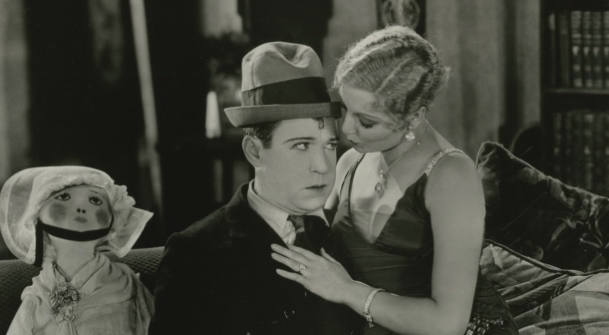
Henry Philmore Langdon, known as Harry, represents one of the most fascinating and contradictory chapters of American cinematic comedy. Born in a small Iowa town at the end of the 19th century, Langdon built his career starting from medicine shows and traveling theater companies, where he performed as a teenager. In 1906, he entered the vaudeville circuit with his first wife Rose, developing over the years a sketch titled “Johnny’s New Car” which he refined until 1915, laying the foundation for the character that would make him famous.
His transition to film happened in 1923 with Sol Lesser’s Principal Pictures Corporation, but it was his arrival at Mack Sennett Studios that turned him into a star. Langdon brought to the screen a unique character: a man with a wide-eyed, childlike gaze and an innocent understanding of the surrounding world. His stage persona stood out sharply from Sennett’s typical broad slapstick, quickly winning a loyal audience. At the peak of his career, he was considered the fourth great comedian of the silent era, alongside Charlie Chaplin, Buster Keaton, and Harold Lloyd.
His collaboration with director Harry Edwards, which began with “Luck o’ the Foolish” in 1924, proved successful. Joining this team were screenwriter Arthur Ripley and the young Frank Capra as gag writer. Vernon Dent became his regular on-screen partner and a close friend in private life. In 1926, after more than twenty shorts for Sennett, Langdon left the studio to make feature films with First National, bringing part of his creative team with him.
“Tramp, Tramp, Tramp” marked his feature film debut, followed by “The Strong Man,” directed by Capra and considered by many his absolute masterpiece. However, during the shooting of “Long Pants” in 1927, creative tensions arose between Capra and Ripley over the tone of the scripts, often marked by darker elements. Langdon sided with Ripley and, when production exceeded budget and schedule, decided to fire Capra and take on directing himself.
The next three films he directed personally – “Three’s a Crowd,” “The Chaser,” and “Heart Trouble” – did not achieve the expected commercial success, leading First National to terminate the contract. His downward trajectory coincided with his divorce from Rose in 1929 and marriage to Helen Walton the same year. The advent of sound forced him back to vaudeville, before Hal Roach hired him in 1929 for a series of talking shorts. Although he managed to adapt his character to the new format, Roach let him go in 1930.
The 1930s saw Langdon continuously reinventing himself. After divorcing Helen Walton in 1932, he acted in some features including “Hallelujah I’m a Bum” with Al Jolson in 1933, then devoted himself to low-budget shorts for Educational Pictures. In 1934, at fifty years old, he married Mabel Sheldon – a marriage that lasted until his death – and signed with Columbia, where he remained for a decade. Toward the end of the 1930s, Hal Roach recalled him as a writer for Laurel and Hardy, contributing to classics like “A Chump at Oxford.” In 1939, he even replaced Stan Laurel in “Zenobia,” acting alongside Oliver Hardy.
During the filming of the musical “Swingin’ on a Rainbow” for Republic, Langdon suffered a cerebral hemorrhage. He died on December 22, 1944, in Los Angeles. Vernon Dent, his lifelong friend, took care of the funeral and helped look after his son Harry Jr., who would pursue a successful career as a Hollywood photographer. Langdon’s ashes rest at Grand View Memorial Park Cemetery in Glendale, California.
The New York Times, in his obituary, wrote that his charm lay in the “consummate ability to appear inexpressibly disconsolate in the face of multiple misfortunes, usually of a domestic nature.” At the height of his career, he earned $7,500 a week, a fortune at the time. On February 8, 1960, he received a star on the Hollywood Walk of Fame at 6927 Hollywood Boulevard. His hometown, Council Bluffs, celebrated “Harry Langdon Day” in 1997 and in 1999 named a street after him.
Langdon never received any Academy Award nominations, which were established only in 1929, when his star had already begun to fade. His artistic legacy remains intact: that eternal childlike face, that wide-eyed owl gaze, that first-class pantomime that made an entire generation laugh. In the 2018 biopic “Stan & Ollie,” actor Richard Cant briefly portrays him during the preparation of “Zenobia.”
His figure continues to be studied by film historians as an example of comic genius who created an unforgettable character, only to lose himself in the labyrinth of directing and autonomous creative choices. His trajectory remains both a warning and a mystery: what would have happened if he had continued working with Capra? The answer lies buried with him in Glendale, along with the faint smile and wide-open gaze that conquered Hollywood.
© All rights reserved
You Might Be Interested
Box Office Most Watched Movies, 'Disclosure Day' and 'The Furious' are the New Releases
Discover the ranking of the most watched movies in the USA, from Scary Movie to Masters of the Universe, Backrooms: plot
Ben Johnson: The Authentic Cowboy Who Conquered Hollywood
Born June 13, 1918, in Foraker, Oklahoma
Priscilla Lane: The Forgotten Star of Hollywood
Priscilla Lane, born June 12
Gene Wilder: The Legacy of a Genius Born on June 11
The Life and Training of Gene Wilder: From Origins to Broadway
Movie Gail Daughtry and the Celebrity Sex Pass, deal with Zoey Deutch, Jon Hamm - plot
Discover Gail Daughtry and the Celebrity Sex Pass, comedy with Zoey Deutch, Jon Hamm. Plot, cast, reviews, trailer
Judy Garland: Life and Career of the Hollywood Icon Born June 10 in Minnesota
Judy Garland’s Film Career and Oscar Awards

Whalefall Thriller Movie: Swallowed, with Josh Brolin, Austin Abrams - Plot
Discover Whalefall, the thriller movie with Josh Brolin and Austin Abrams. Plot, cast, trailer, release date.
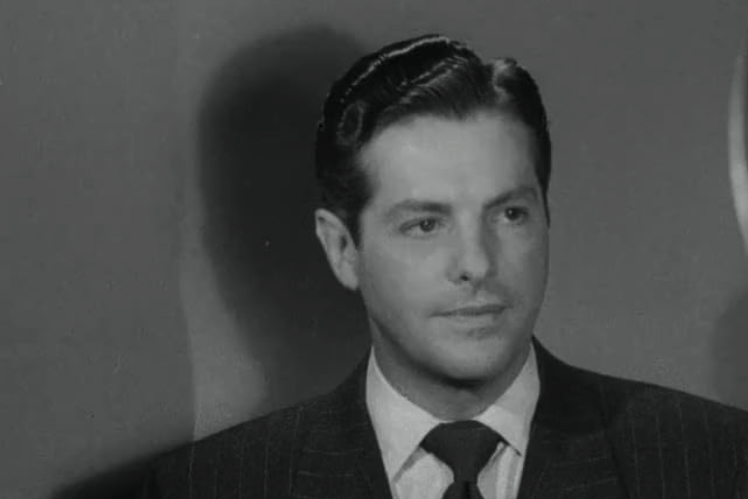
Robert Cummings: Career Overview and Hollywood Legacy from Missouri to the Silver Screen
Born June 9, 1910 – From Joplin Roots to Hollywood Stardom