
John Forsythe, the face of Dynasty, the voice of Charlie's Angels
John Forsythe was born on January 29, 1918
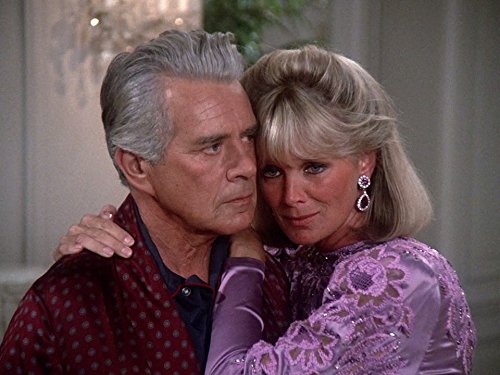
John Forsythe spans six decades of American entertainment history with the discretion of someone who knows how to be remembered without excess. Born in 1918 in New Jersey as John Lincoln Freund, his journey from sports chronicler to Hitchcockian interpreter represents an artistic trajectory that transcends a mere acting career. Perhaps the value of his figure lies precisely in this capacity for transformation, never shouted, always contained.
His New York training in the Forties marks the beginning of a metamorphosis that leads him from paternal resistance to the stages of Broadway. Military service during the World War becomes, paradoxically, an opportunity for artistic growth through the production "Winged Victory." Replacing Henry Fonda in "Mister Roberts" in 1950 might appear an impossible feat, yet Forsythe succeeds without ever seeking imitation, instead finding a stylistic similarity that critics cannot ignore.
The encounter with Hitchcock marks his transition to cinema. "The Trouble with Harry" of 1955 doesn't achieve immediate success in America, but Europe grasps its depth. His return with "Topaz" in 1969 confirms an artistic partnership that bears the hallmark of auteur collaborations. But it's television that ultimately consecrates him.
The voice filtered through the speaker in "Charlie's Angels" transforms his physical absence into iconic presence. As if invisibility became expressive power. When instead he embodies oil magnate Blake Carrington in "Dynasty," Forsythe offers a portrait of mature masculinity that oscillates between business toughness and emotional vulnerability. "Even now?" the viewer seems to ask when faced with this duality, "not now."
The ordinary life of a man passionate about horses and environmental causes is thus sublimated in the televisual art. Health difficulties—the bypass in 1979, the cancer in 2006—become the armor he would like to shed. But it is precisely the composure with which he faces each existential passage that defines his style, until his last breath in April 2010. Only when one retraces his entire career does everything seem real: elegance is not a pose, but a substance that runs through the man and the artist without interruption.
© All rights reserved

You Might Be Interested
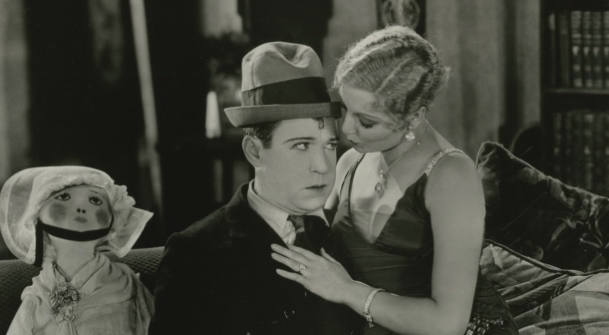
Harry Langdon: the childlike face that conquered Hollywood
Council Bluffs, Iowa, June 15, 1884
Box Office Most Watched Movies, 'Disclosure Day' and 'The Furious' are the New Releases
Discover the ranking of the most watched movies in the USA, from Scary Movie to Masters of the Universe, Backrooms: plot
Ben Johnson: The Authentic Cowboy Who Conquered Hollywood
Born June 13, 1918, in Foraker, Oklahoma
Priscilla Lane: The Forgotten Star of Hollywood
Priscilla Lane, born June 12
Gene Wilder: The Legacy of a Genius Born on June 11
The Life and Training of Gene Wilder: From Origins to Broadway
Movie Gail Daughtry and the Celebrity Sex Pass, deal with Zoey Deutch, Jon Hamm - plot
Discover Gail Daughtry and the Celebrity Sex Pass, comedy with Zoey Deutch, Jon Hamm. Plot, cast, reviews, trailer
Judy Garland: Life and Career of the Hollywood Icon Born June 10 in Minnesota
Judy Garland’s Film Career and Oscar Awards

Whalefall Thriller Movie: Swallowed, with Josh Brolin, Austin Abrams - Plot
Discover Whalefall, the thriller movie with Josh Brolin and Austin Abrams. Plot, cast, trailer, release date.