
Orson Welles: The Genius Who Revolutionized Hollywood
Born on May 6
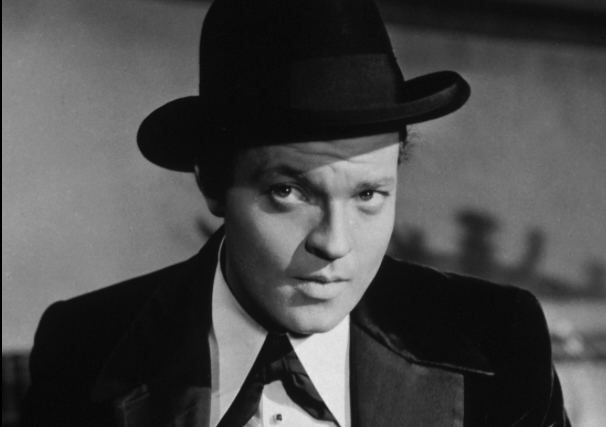
George Orson Welles was born on May 6, 1915, in Kenosha, Wisconsin, to a wealthy family that allowed him to cultivate extraordinary talents from childhood. His mother was a pianist and his father an inventor; both died while he was still a teenager, leaving him under the guardianship of Dr. Maurice Bernstein, who immediately recognized his exceptional abilities. At just twenty-two, Welles terrified America with his 1938 radio broadcast "The War of the Worlds," convincing thousands of listeners that Martians were actually invading New Jersey. That widespread panic opened the doors of Hollywood for him.
RKO offered him an unprecedented contract: full control over production, directing, screenwriting, and editing. Welles was only twenty-five when he made "Citizen Kane" in 1941, a film that many critics still consider the greatest ever made. The film received nine Oscar nominations but won only the award for Best Original Screenplay, shared with Herman J. Mankiewicz. Hollywood punished Welles for daring to portray magnate William Randolph Hearst so unfavorably: Hearst’s newspapers boycotted the film and the Oscar ceremony, preventing it from winning in major categories.
After that initial masterpiece, Welles’s career became a continuous battle against the studios. The 1942 film "The Magnificent Ambersons" was heavily cut by RKO while he was in Brazil shooting an unfinished documentary. The original film lasted 132 minutes; the studio reduced it to 88, destroying the cut scenes. Welles never forgave this affront. In the following years, he made "The Lady from Shanghai" with Rita Hayworth, his second wife, turning the glamorous actress into a platinum blonde that the studio hated. The 1947 film included the famous hall of mirrors sequence, which became iconic in film noir.
In 1948 Welles acted in and directed "Macbeth" with a very limited budget, shot in just twenty-three days. Three years later came "Othello," which won the Palme d’Or at Cannes in 1952 but took four years to complete due to financial problems. Welles financed his artistic projects by acting in commercial, often mediocre films, accepting any role that guaranteed him money to continue creating.
The 1958 film "Touch of Evil" was his last major Hollywood film. Universal also altered this film against his will, but in 1998 the studio produced a new version following the fifty-eight pages of notes Welles had sent to the producers. That memorandum demonstrated how far ahead of his time he was: every sound detail and every shot had a precise narrative purpose.
In the 1960s and 1970s Welles lived mainly in Europe, making fragmented and often unfinished films. The 1965 "Falstaff," based on Shakespeare, was considered by many his most personal artistic testament. In 1971 the Academy awarded him an honorary Oscar for his extraordinary contribution to cinema, a recognition that came too late to fully rehabilitate him in the eyes of the industry. During the ceremony, Welles appeared moved but also bitter about lost opportunities.
His last major project, "The Other Side of the Wind," remained unfinished for decades due to legal disputes and lack of funds. Welles died on October 10, 1985, in Los Angeles, leaving behind hours of footage that no one knew how to assemble. Netflix acquired the rights and in 2018 completed the film following the director’s instructions, finally allowing the public to see the work forty-three years after filming began.
Welles acted in over one hundred films, often to finance his projects. He played Harry Lime in Carol Reed’s "The Third Man," appeared in "The 10th Victim," and lent his voice to numerous documentaries. His imposing presence and deep voice made him recognizable even in wine commercials he filmed in his later years, which ironically became cult for their unintended humor.
Restoration and rediscovery of his works continue: in 2022 a new 4K restored version of "Touch of Evil" was presented, allowing a new generation to discover the visionary genius of a man Hollywood never truly understood.
© All rights reserved

You Might Be Interested
Bob Fosse: A Career in Dance and Direction
Born June 23, 1927 in Chicago, Illinois

Film Supergirl: Woman of Tomorrow, trivia
Supergirl: Woman of Tomorrow is the upcoming action film. Plot, cast, trailer, interviews

Sci-fi film Klara and the Sun: search for the sun with Jenna Ortega, Amy Adams, Mia Tharia - plot
Discover Klara and the Sun, the drama film with Jenna Ortega, Amy Adams. Plot, cast
Billy Wilder: The Viennese Journalist Who Conquered Hollywood
Born June 22, 1906 in Sucha Beskidzka, Austria-Hungary

Box office most viewed films, 'Toy Story 5' and 'Leviticus' are the newcomers
Discover the rankings of the most-watched movies in the USA, from Toy Story 5 to Disclosure Day: plot and cast
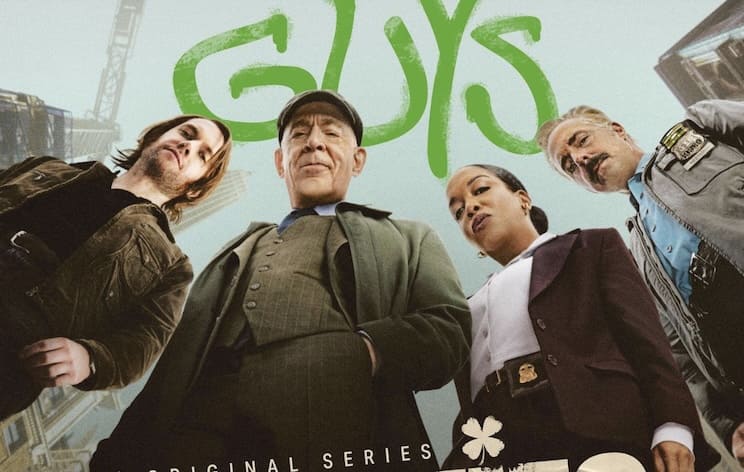
The Westies: the new crime series with J.K. Simmons and the Irish gang of New York
The Westies MGM+ streaming July 2026: cast, plot, trailer crime series Hell's Kitchen
.jpg)
The Five Star Weekend: Jennifer Garner Stars in Miniseries About Friendship and Grief, with Regina Hall
The Five Star Weekend cast, plot, release date: Peacock series with Jennifer Garner, Regina Hall, Chloë Sevigny
Martin Landau: The Actor Who Drew Comics
Brooklyn, June 20, 1928