
Roberto Rossellini: Master of Italian Neorealism
Born May 8
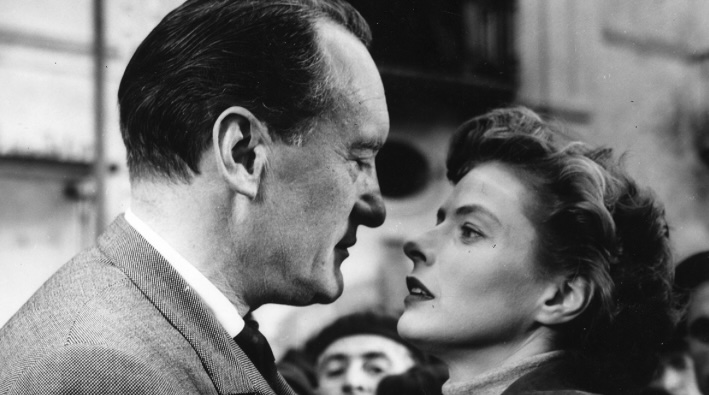
Roberto Rossellini was born in Rome on May 8, 1906, into a wealthy family. He began his career in the 1930s as a sound technician and assistant director, directing his first films during the fascist regime. His professional breakthrough came in 1945 with Rome, Open City, filmed among the ruins of the recently liberated capital. The film, starring Anna Magnani and Aldo Fabrizi, depicts the Roman Resistance with a realistic and direct style, using non-professional actors and real locations. This stylistic choice, born out of necessity, became the hallmark of Italian neorealism. Rome, Open City received an Oscar nomination for Best Screenplay in 1947, marking the entry of Italian cinema into the Hollywood scene.
In 1946 Rossellini made Paisan, a six-episode film following the Allied advance from Sicily to Northern Italy. The fragmented structure and documentary-style photography create a portrayal of the war far from classical rhetoric. The film won the National Board of Review Award for Best Foreign Film in 1948, consolidating the director’s international reputation. The war trilogy concluded with Germany Year Zero (1948), set in destroyed Berlin, following the story of a boy forced to make extreme choices to survive.
In 1949 Rossellini’s career changed radically with the meeting of Ingrid Bergman, a famous Hollywood actress. Bergman wrote him a letter expressing admiration and willingness to work with him. This led to Stromboli (1950), filmed on the volcanic island, during which a relationship between the two began that became an international scandal. Both married, Bergman’s pregnancy triggered a strong reaction in the United States, with boycotts and public criticism. Bergman was forced to leave America for seven years.
Rossellini and Bergman married in 1950 and collaborated on five films: besides Stromboli, they made Europe ’51 (1952), Journey to Italy (1954), Fear (1954), and Joan of Arc at the Stake (1954). These films, initially received coldly, were later reassessed by French critics and considered modernist masterpieces. In particular, Journey to Italy influenced the Nouvelle Vague and directors like Jean-Luc Godard thanks to its sparse narration and silences between the protagonists.
The marriage with Bergman ended in 1957 when Rossellini began a relationship with Indian screenwriter Sonali Das Gupta during the filming of the documentary India: Matri Bhumi. This trip to India, at the invitation of Prime Minister Nehru, marked a shift away from commercial cinema toward educational and television projects, with the idea that television was the future of cultural dissemination.
In the 1960s and 1970s Rossellini made a series of historical films for RAI: The Taking of Power by Louis XIV (1966), Socrates (1970), Blaise Pascal (1971), Augustine of Hippo (1972), and The Age of Cosimo de’ Medici (1973). These works, made with limited budgets but philological rigor, brought Italian history into viewers’ homes with a didactic approach.
In 1959 Rossellini returned to fiction cinema with General Della Rovere, starring Vittorio De Sica. The film, telling the story of a con man forced to impersonate a Resistance general, won the Golden Lion at the Venice Film Festival, tied with Monicelli’s The Great War. This was his last major commercial success.
Roberto Rossellini died in Rome on June 3, 1977. His influence on world cinema remains evident, with contemporary directors acknowledging his contribution. In 2026, for the 120th anniversary of his birth, the Film at Lincoln Center in New York organized a retrospective featuring Paisan and the North American premiere of the documentary Roberto Rossellini, Living Without a Script, which traces his career through previously unseen archival material.
© All rights reserved
-(1)-(1).jpg)

You Might Be Interested
Bob Fosse: A Career in Dance and Direction
Born June 23, 1927 in Chicago, Illinois

Film Supergirl: Woman of Tomorrow, trivia
Supergirl: Woman of Tomorrow is the upcoming action film. Plot, cast, trailer, interviews
Sci-fi film Klara and the Sun: search for the sun with Jenna Ortega, Amy Adams, Mia Tharia - plot
Discover Klara and the Sun, the drama film with Jenna Ortega, Amy Adams. Plot, cast
Billy Wilder: The Viennese Journalist Who Conquered Hollywood
Born June 22, 1906 in Sucha Beskidzka, Austria-Hungary

Box office most viewed films, 'Toy Story 5' and 'Leviticus' are the newcomers
Discover the rankings of the most-watched movies in the USA, from Toy Story 5 to Disclosure Day: plot and cast
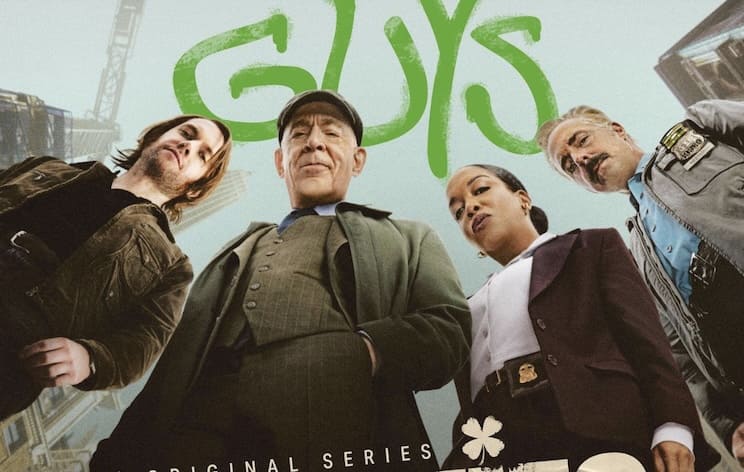
The Westies: the new crime series with J.K. Simmons and the Irish gang of New York
The Westies MGM+ streaming July 2026: cast, plot, trailer crime series Hell's Kitchen
.jpg)
The Five Star Weekend: Jennifer Garner Stars in Miniseries About Friendship and Grief, with Regina Hall
The Five Star Weekend cast, plot, release date: Peacock series with Jennifer Garner, Regina Hall, Chloë Sevigny
Martin Landau: The Actor Who Drew Comics
Brooklyn, June 20, 1928