
Federico Fellini: Cinema as an obsession with aesthetics and philosophy.
Federico Fellini was born on January 20, 1920.
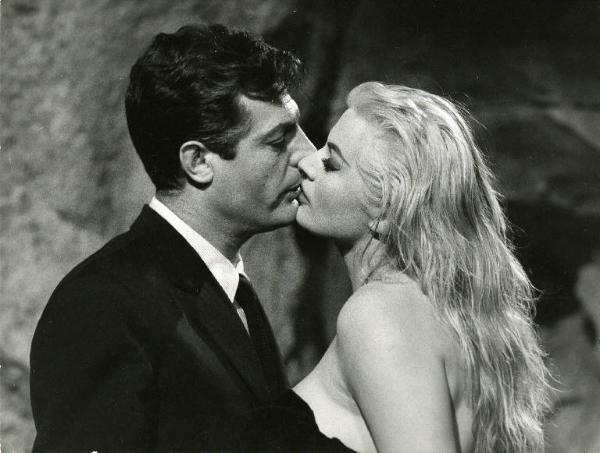
Federico Fellini was born in Rimini on January 20, 1920, into a middle-class family, the son of a traveling salesman and a housewife of Roman origins. His childhood in the provinces, spent attending the Fulgor cinema and walking along the seafront, would become the iconographic reservoir for nearly all of his future work. Despite the legend he loved to fuel himself, he never actually ran away from home to join a circus, though the world of clowns and big tops remained his greatest aesthetic and philosophical obsession.
In 1939, he moved to Rome under the pretext of enrolling in law school, but he never took a single exam. Instead, he began working as a satirical journalist and cartoonist for Marc'Aurelio, where he formed friendships that were fundamental to his entry into show business. During the war years, he met Giulietta Masina; they married in 1943, and she remained his life partner and professional muse until his death. Their union was marked by the tragedy of losing a son, Pier Federico, who died just eleven days after his birth in 1945.

His directorial debut occurred as a co-director with Alberto Lattuada on Variety Lights, but it was with I Vitelloni that he achieved his first true international success. Definitive consecration came in the 1950s with La Strada, a film that won the first of his four Academy Awards for Best Foreign Language Film. During this period, Fellini began a steady collaboration with Marcello Mastroianni, his onscreen alter ego, with whom he would film masterpieces such as La Dolce Vita. The latter, winner of the Palme d'Or at Cannes in 1960, sparked an unprecedented scandal for its portrayal of Roman decadence, facing violent attacks from the Vatican and politicians, while permanently revolutionizing cinematic language.
His artistic maturity coincided with a move beyond neorealism in favor of a dreamlike, subjective dimension. With 8½, Fellini staged a director's creative block, transforming a personal crisis into a metalinguistic work that won another Oscar and is regularly included in rankings of the greatest films in history. His career continued with chromatic and visual experiments like Juliet of the Spirits and Satyricon, leading to a nostalgic return to his roots with Amarcord—a Romagnolo dialect term meaning "I remember" that has officially entered the Italian dictionary.

Fellini was known for a peculiar working method: he almost never used direct sound, preferring to dub his actors later. This allowed him to shout suggestions or even recite lines during filming. He often asked actors to count or recite random numbers, knowing he would change the dialogue in post-production. He was also a frequent visitor of dreams, which he transcribed and drew daily in his Book of Dreams on the advice of Jungian psychoanalyst Ernst Bernhard. Many of the grotesque creatures and surreal situations in his films stem directly from this practice of visual self-analysis.
In the 1980s and 1990s, despite changing public tastes, he continued to produce significant works like And the Ship Sails On and Ginger and Fred. In March 1993, he received an Honorary Academy Award from the hands of Sophia Loren and Marcello Mastroianni; during the ceremony, he famously asked his wife Giulietta, caught in tears in the audience, to stop crying. He passed away in Rome on October 31 of that same year, just weeks after celebrating fifty years of marriage. His funeral, held in Studio 5 at Cinecittà—which he considered his true home—was attended by thousands of people paying their final respects to the man who had turned the camera into a tool for photographing the invisible.
© All rights reserved
You Might Be Interested
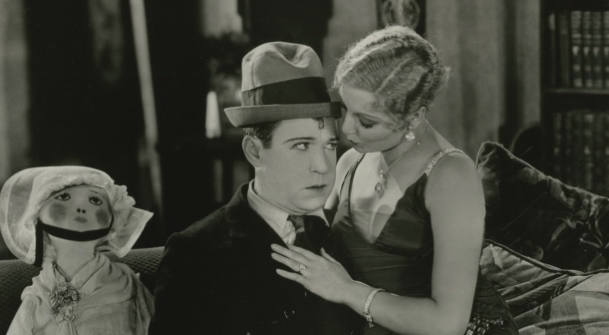
Harry Langdon: the childlike face that conquered Hollywood
Council Bluffs, Iowa, June 15, 1884
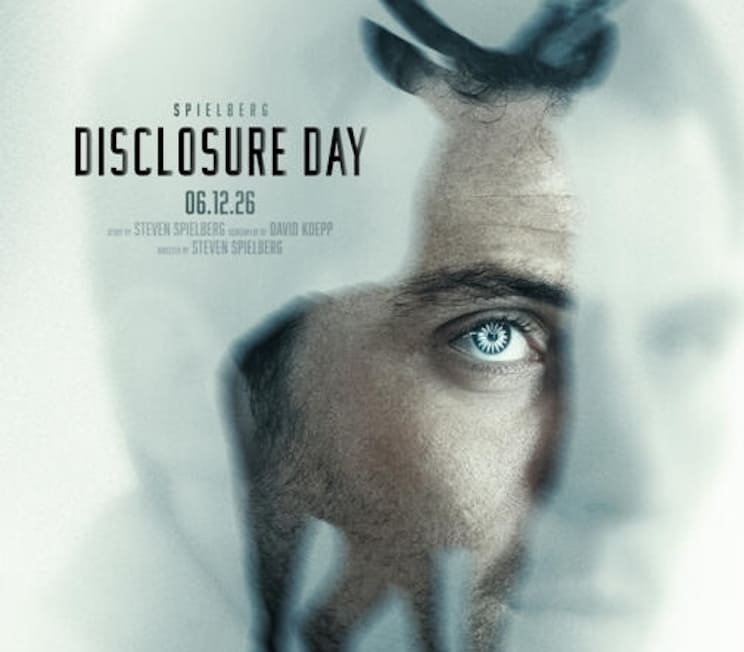
Box Office Most Watched Movies, 'Disclosure Day' and 'The Furious' are the New Releases
Discover the ranking of the most watched movies in the USA, from Scary Movie to Masters of the Universe, Backrooms: plot
Ben Johnson: The Authentic Cowboy Who Conquered Hollywood
Born June 13, 1918, in Foraker, Oklahoma
Priscilla Lane: The Forgotten Star of Hollywood
Priscilla Lane, born June 12
Gene Wilder: The Legacy of a Genius Born on June 11
The Life and Training of Gene Wilder: From Origins to Broadway
Movie Gail Daughtry and the Celebrity Sex Pass, deal with Zoey Deutch, Jon Hamm - plot
Discover Gail Daughtry and the Celebrity Sex Pass, comedy with Zoey Deutch, Jon Hamm. Plot, cast, reviews, trailer
Judy Garland: Life and Career of the Hollywood Icon Born June 10 in Minnesota
Judy Garland’s Film Career and Oscar Awards
Whalefall Thriller Movie: Swallowed, with Josh Brolin, Austin Abrams - Plot
Discover Whalefall, the thriller movie with Josh Brolin and Austin Abrams. Plot, cast, trailer, release date.