
Gene Hackman: The Definitive American Character Actor Who Reshaped Hollywood's Leading Man
From Military Service to Oscar Glory: Exploring the Remarkable Six-Decade Career of Cinema's Most Authentic Performer
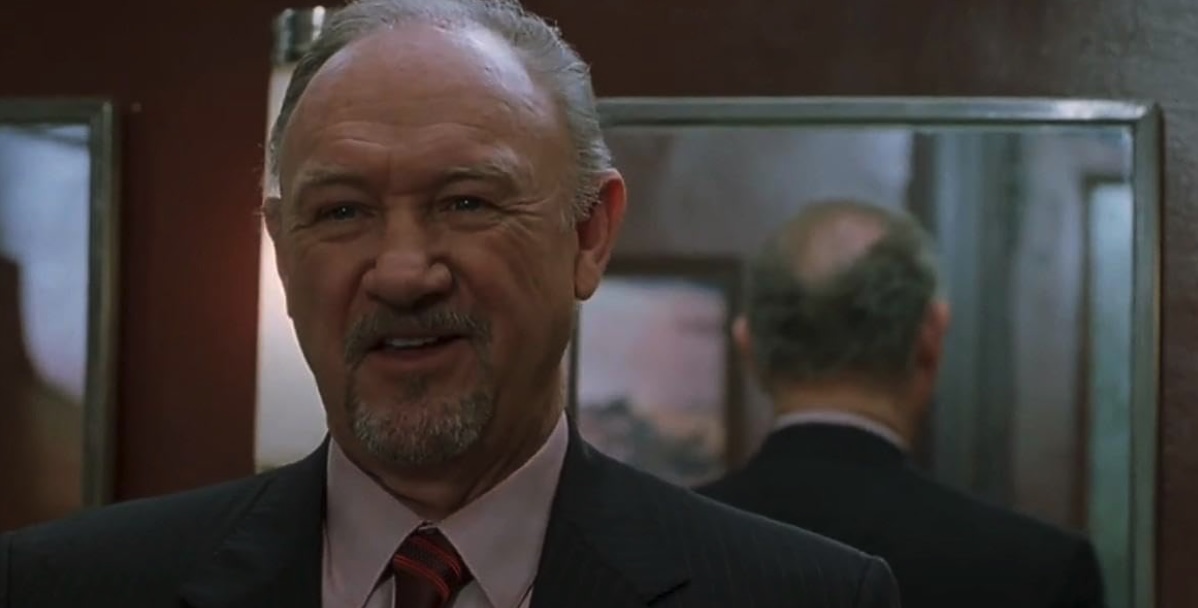
Gene Hackman, born January 30, 1930, in San Bernardino, California, stands as one of American cinema's most transformative figures—an actor whose naturalistic approach and versatile performances redefined screen acting across six decades. His journey to cinematic prominence followed an unconventional path that included service in the Marines and journalism studies before his eventual commitment to performance arts.
Unlike many Hollywood stars who achieve recognition in their youth, Hackman's ascent to prominence came later in life. His first significant industry recognition arrived in 1968 with an Academy Award nomination for his supporting role in Arthur Penn's groundbreaking "Bonnie and Clyde." However, it was William Friedkin's seminal 1971 police procedural "The French Connection" that cemented Hackman's position in cinematic history. His portrayal of the unorthodox, relentless detective Jimmy "Popeye" Doyle earned him his first Academy Award for Best Actor and established a new archetype for the morally complex protagonist—a character type that would influence crime thrillers for decades to come.
The 1970s marked Hackman's artistic zenith, during which he demonstrated remarkable range across disparate genres. Francis Ford Coppola's psychological thriller "The Conversation" (1974) showcased his ability to inhabit internalized characters through his nuanced portrayal of surveillance expert Harry Caul. Concurrently, Hackman displayed commercial versatility by embracing populist entertainment, most notably as the charismatic villain Lex Luthor in Richard Donner's "Superman" (1978) and with his brief yet memorable appearance in Mel Brooks' comedy classic "Young Frankenstein."
Hackman's artistic renaissance continued into the 1990s when he collaborated with Clint Eastwood on the revisionist Western "Unforgiven" (1992). His interpretation of the sadistic Sheriff Little Bill Daggett earned him a second Academy Award, this time for Best Supporting Actor, and further demonstrated his capacity for creating multidimensional antagonists. Additional significant performances included his work in Alan Parker's "Mississippi Burning" (1988) and his Golden Globe-winning turn as Royal Tenenbaum in Wes Anderson's "The Royal Tenenbaums" (2001), a role that introduced his talents to a new generation of filmgoers.
His professional career concluded in 2004 with the political comedy "Welcome to Mooseport," a decision made not from diminished industry standing but from personal health considerations. In subsequent interviews, Hackman cited cardiac concerns as the primary factor in his retirement from the physically and emotionally demanding environment of film production. His post-acting years were productively spent pursuing literary endeavors, writing historical novels from his residence in Santa Fe, New Mexico.
Hackman's passing in February 2025 at age 95 marked the conclusion of a remarkable life. Autopsy findings revealed he had suffered from severe cardiovascular disease and advanced Alzheimer's, having died approximately a week after his wife Betsy Arakawa. His legacy encompasses over eighty film credits, multiple major industry awards including two Oscars, four Golden Globes, and two BAFTAs, and an approach to characterization that permanently altered the landscape of American cinema.
© All rights reserved


You Might Be Interested
Martin Landau: The Actor Who Drew Comics
Brooklyn, June 20, 1928
Charles Coburn: the gentleman who conquered Hollywood at sixty
Born June 19, 1877, in Macon, Georgia
Thriller Movie The Lottery: $300 Million with Belmont Cameli, Sofia Wylie, Madison Thompson - Plot
La lotteria: trama, cast e ambientazione del thriller con Belmont Cameli e Sofia Wylie.

Comedy Movie 40 Dates and 40 Nights, dating app with Bailee Madison, Joel Courtney - plot
40 Dates and 40 Nights: plot, cast and release of the movie with Bailee Madison and Joel Courtney

Blanche Sweet: The Actress Who Invented the Modern Heroine, Forgotten by Hollywood
Born on June 18
Tombolini at Pitti Uomo 110: Lightness as the New Frontier of Menswear

Shrek 5 Movie, News on the Sequel
Discover Shrek 5, the movie with Mike Myers, Cameron Diaz, Eddie Murphy. Plot, cast, release, trailer

The Echo Chamber Movie, Voice in the Room with Luca Marinelli, Alicia Vikander, Susan Sarandon
The Echo Chamber: plot, cast and production of the movie with Luca Marinelli