
Dracula: A Love Tale - Besson's Gothic Romance Transcends Time
Experience the Immortal Passion of Cinema's Most Haunting Love Story | In Theaters February 6, 2026
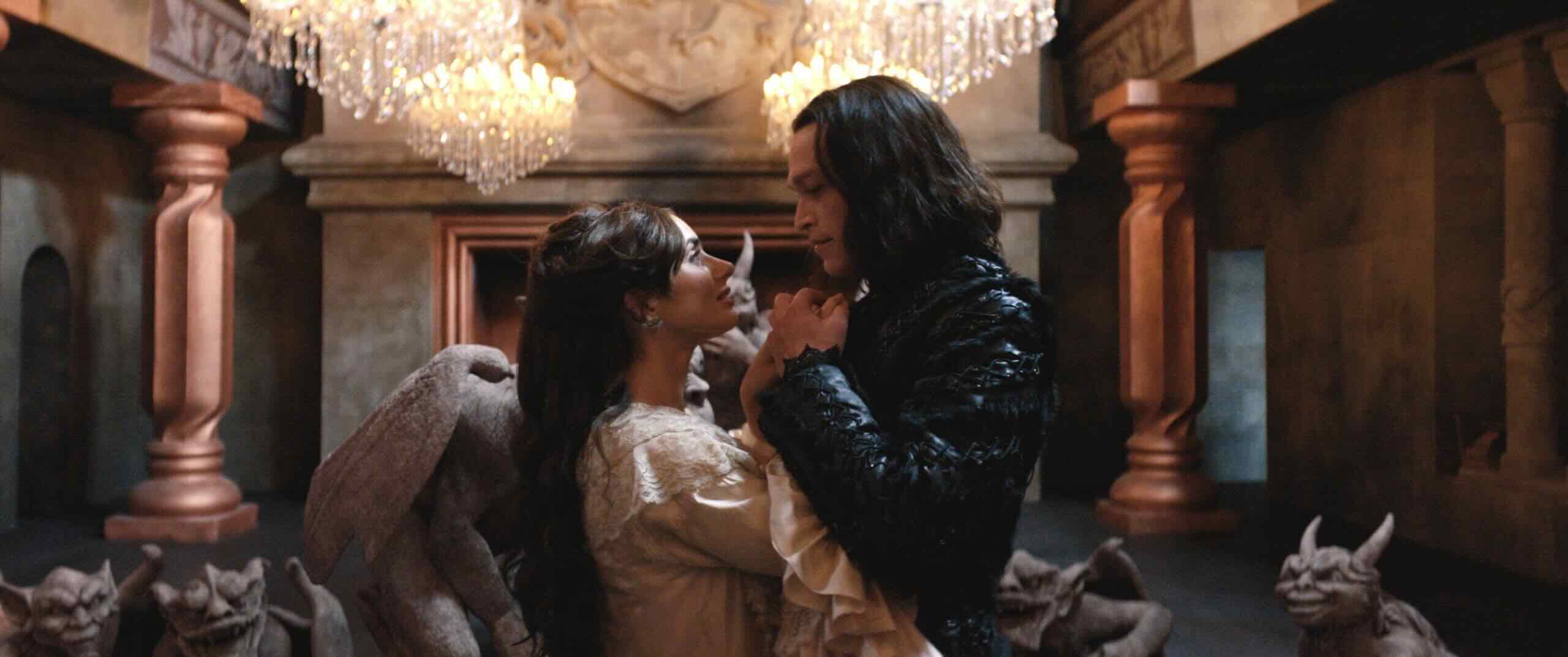
Luc Besson's "Dracula: A Love Tale" emerges as a curious anomaly in contemporary European cinema—neither traditional horror nor conventional romance, but something that exists in the liminal space between genres. The French director's €45 million vision transforms Stoker's Victorian nightmare into a centuries-spanning meditation on longing, positioning the vampire not as predator but as eternal pilgrim.
The narrative architecture spans from 1480 Romania to 1879 Paris, deliberately setting its emotional crescendo against the centennial celebrations of the French Revolution—a backdrop that serves as both historical anchor and metaphorical counterpoint to the protagonist's personal revolution against mortality. This temporal framework allows Besson to explore how memory calcifies across centuries, how desire remains the only constant in an immortal existence.
What distinguishes this production from similar period adaptations is its tactile approach to aging. Rather than relying on digital manipulation, Besson's team crafted nearly 200 prosthetic pieces—a decision that grounds the supernatural in physical reality. The transformation becomes not merely visual but tangible, each wrinkle and texture a testament to time's passage. This artisanal approach extends to the environments themselves, with the pristine landscapes of Kuhmo and Kainuu in Finland serving as Transylvania's untamed wilderness—spaces where nature's indifference mirrors the vampire's isolation.
Caleb Landry Jones, reuniting with Besson after their collaboration on "Dogman," brings a restrained intensity to the Count, eschewing the theatrical flourishes that often characterize the role. His performance finds counterbalance in Christoph Waltz's priest—not merely an antagonist but a philosophical foil representing faith's certainty against immortality's burden. The female characters, portrayed by Matilda De Angelis as Maria and Zoë Bleu Sidel as Mina/Elisabetta, function less as traditional victims and more as emotional anchors across different temporal planes.
Perhaps most revealing of Besson's artistic process is his unconventional source material—the director reportedly immersed himself in Billie Eilish's "Hit Me Hard and Soft" album during production, finding in its contemporary melancholy a tonal parallel to his nineteenth-century narrative. This musical influence merges with visual elements borrowed from Japanese Butoh dance, creating a movement vocabulary for Jones that emphasizes the weight of centuries in every gesture.
From a distribution standpoint, the film has had a multifaceted international journey. After premiering in Italy at the Rome Film Festival in October 2025, and debuting in several European markets, it will be released in North American cinemas on 6 February 2026, distributed by Vertical. In Italy, the film received a solid initial reception at the box office, topping the charts in its first few days of release. Danny Elfman composed the soundtrack, balancing the gothic horror with the more intimate and orchestral elements of the 'love story' promised by the title.
© All rights reserved

You Might Be Interested
Martin Landau: The Actor Who Drew Comics
Brooklyn, June 20, 1928
Charles Coburn: the gentleman who conquered Hollywood at sixty
Born June 19, 1877, in Macon, Georgia
Thriller Movie The Lottery: $300 Million with Belmont Cameli, Sofia Wylie, Madison Thompson - Plot
La lotteria: trama, cast e ambientazione del thriller con Belmont Cameli e Sofia Wylie.
Comedy Movie 40 Dates and 40 Nights, dating app with Bailee Madison, Joel Courtney - plot
40 Dates and 40 Nights: plot, cast and release of the movie with Bailee Madison and Joel Courtney
Blanche Sweet: The Actress Who Invented the Modern Heroine, Forgotten by Hollywood
Born on June 18
Tombolini at Pitti Uomo 110: Lightness as the New Frontier of Menswear
Shrek 5 Movie, News on the Sequel
Discover Shrek 5, the movie with Mike Myers, Cameron Diaz, Eddie Murphy. Plot, cast, release, trailer

The Echo Chamber Movie, Voice in the Room with Luca Marinelli, Alicia Vikander, Susan Sarandon
The Echo Chamber: plot, cast and production of the movie with Luca Marinelli