Sidney Lumet’s career spanned six decades of American cinema, from the late 1950s until 2007, when he made his final film. The son of Baruch Lumet, a Yiddish theater actor, and Eugenia Wermus, a dancer, Sidney grew up in a theatrical environment, stepping onto the stage at the age of four. The family moved to Manhattan’s Lower East Side in 1926, where the young Lumet absorbed the social dynamics of a neighborhood marked by poverty and ethnic tensions. This formative experience deeply influenced his cinematic vision, which focused on urban dramas and issues of social justice.
Before entering film, Lumet worked extensively in television, directing episodes for series such as Danger, You Are There, Goodyear Television Playhouse, and Kraft Television Theatre. This television background shaped his fast and efficient working method, characterized by long rehearsals and technical skill that allowed him to shoot complex films quickly and on modest budgets.
His film debut came in 1957 with 12 Angry Men, a courtroom drama shot in less than three weeks on a $337,000 budget. Henry Fonda, who produced the film with Reginald Rose, chose Lumet because he was “wonderful with actors.” During production, a notable incident occurred: Fonda, seeing the painted backdrop depicting Foley Square, erupted in anger, comparing it unfavorably to the realistic backdrops in Hitchcock films. Lumet, who had chosen the economical solution, feared the worst. But the next day, after viewing the dailies of the first scene, Fonda grabbed Lumet’s neck so tightly it nearly popped his eyes out and whispered, “Sidney, it’s magnificent.” Then he left the screening room and never returned to watch the dailies again. The film earned three Oscar nominations, including Best Director for Lumet, and won the Golden Bear at the Berlin Film Festival.
Lumet developed a reputation as an “actor’s director,” able to draw extraordinary performances from his casts. Over his career, seventeen actors who worked with him received Oscar nominations, six of whom won. Among his most celebrated collaborators were Al Pacino, with whom he made Serpico (1973) and Dog Day Afternoon (1975), Dustin Hoffman, Paul Newman, Sean Connery, Katharine Hepburn, Jane Fonda, and Faye Dunaway.
Dog Day Afternoon, based on a real bank robbery on August 22, 1972, at a Chase Manhattan Bank branch in Brooklyn, stands as a high point in his filmography. Lumet, who traditionally disliked improvisation, made an exception here. During rehearsals, someone asked if improvisation was possible in scenes where the robbers and hostages simply waited, and Lumet realized it made sense. The film was shot with a realistic approach: no extradiegetic music, natural lighting, no sophisticated angles. Night shoots lasted seven consecutive nights on a residential street, greatly disturbing the neighborhood’s residents. The film received six Oscar nominations, winning Best Original Screenplay for Frank Pierson.
The following year Lumet directed Network, a fierce satire of television written by Paddy Chayefsky. The film garnered ten Oscar nominations and won four: Best Actor for Peter Finch, Best Actress for Faye Dunaway, Best Supporting Actress for Beatrice Straight, and Best Original Screenplay for Chayefsky. Lumet received his third nomination for Best Director but did not win. The film also won the Golden Globe for Best Director, the only one Lumet received in his career.
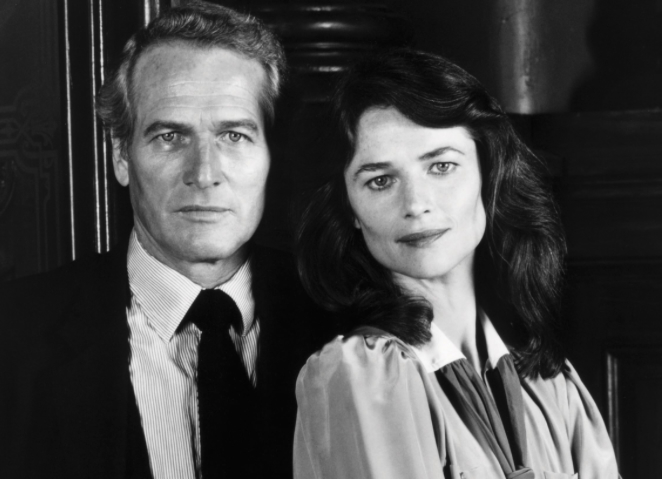
In 1982 came The Verdict, a legal drama starring Paul Newman as an alcoholic lawyer seeking redemption. The film earned five Oscar nominations, including Lumet’s fourth for Best Director. Newman was nominated for Best Actor, but neither won. The year before, in 1981, Lumet had received his only nomination for Best Adapted Screenplay with Prince of the City, a film about police corruption presented at the Venice Film Festival.
Lumet’s versatility also showed in projects seemingly far from his usual territory. In 1974 he directed Murder on the Orient Express, an adaptation of Agatha Christie’s novel that received six Oscar nominations and won one for Ingrid Bergman as Best Supporting Actress. In 1978 he even ventured into musicals with The Wiz, an African-American version of The Wizard of Oz starring Diana Ross and Michael Jackson, which earned four Oscar nominations in technical categories.
Lumet continued working uninterruptedly until the last years of his life. In 2007, at age 83, he made Before the Devil Knows You’re Dead, a family thriller starring Philip Seymour Hoffman and Ethan Hawke. The film was shot digitally, when the digital revolution was still in its early stages, showing Lumet’s willingness to experiment with new technologies. Hoffman said that if one didn’t know who directed it, one would think it was a thirty-year-old filmmaker. During shooting, Lumet suggested placing a camera operator on a blanket and dragging him across a long table to get a slow tracking shot on Albert Finney’s face. Cinematographer Ron Fortunato signaled a timeout, but Lumet got angry. Fortunato crossed his fingers and said, “Sidney, you’ll like it.” It worked perfectly, and when they had to shoot Ethan Hawke’s shot, they simply turned the camera to the other side of the table. Lumet was thrilled: if a solution made the work faster, he loved it.
In 2005, at the 77th Academy Awards, the Academy of Motion Picture Arts and Sciences awarded him an Honorary Oscar “for his brilliant services to screenwriters, performers, and the art of cinema.” This was the only Oscar Lumet actually won, after five nominations as director and screenwriter that never resulted in a competitive win.
Lumet died of lymphoma on April 9, 2011, in New York, the city he had portrayed for over fifty years. A few months after his death, television commentator Lawrence O’Donnell aired a tribute, and a retrospective of his work was held at New York’s Lincoln Center. In October 2011, the organization Human Rights First inaugurated the “Sidney Lumet Award for Integrity in Entertainment,” awarded to the television series The Good Wife. Lumet had collaborated with Human Rights First on a media project about the portrayal of torture and interrogations on television.
His filmography includes forty-three feature films, averaging nearly one film per year. Other significant titles include The Pawnbroker (1964), which earned Rod Steiger an Oscar nomination for Best Actor; Fail Safe(1964), a Cold War thriller; The Hill (1965) with Sean Connery; Equus (1977), which received three Oscar nominations; The Morning After (1986) with Jane Fonda; and Running on Empty (1988) with River Phoenix.
Lumet’s method was based on exhaustive rehearsals before shooting. For Dog Day Afternoon, he held rehearsals for three weeks instead of the usual two, mapping every shot during the rehearsal process. All actors, regardless of the size of their role, participated fully and knew exactly where they would be and what they would do. Lance Henriksen, who acted in the film, recalled: “We did something I learned from Sidney: he mapped every location on the floor of a ballroom, and no matter how small the role, we were all there and watched the whole film to know exactly where we’d be. It was like giving you not just respect but a gift: ‘you’re part of this, friend, there are no small parts. It’s collective.’”
This work ethic came from his childhood in the Lower East Side, where he learned that discipline and hard work were not just admirable habits but reflected the quality of a person’s character. Lumet understood early on that his work as an actor put food on the table, and this established in him a professional ethic that became a hallmark of his career.
Critic Owen Gleiberman, upon Lumet’s death in April 2011, wrote: “For him, it was a matter of empathy, but it was also a matter of the cathartic theater of cinema. The more he could show you a fallen character, and the more he could make you see that you had something in common with that character, the more he could produce an almost physical sensation, a shiver of recognition. For Sidney Lumet, that was grace.”




.jpeg)