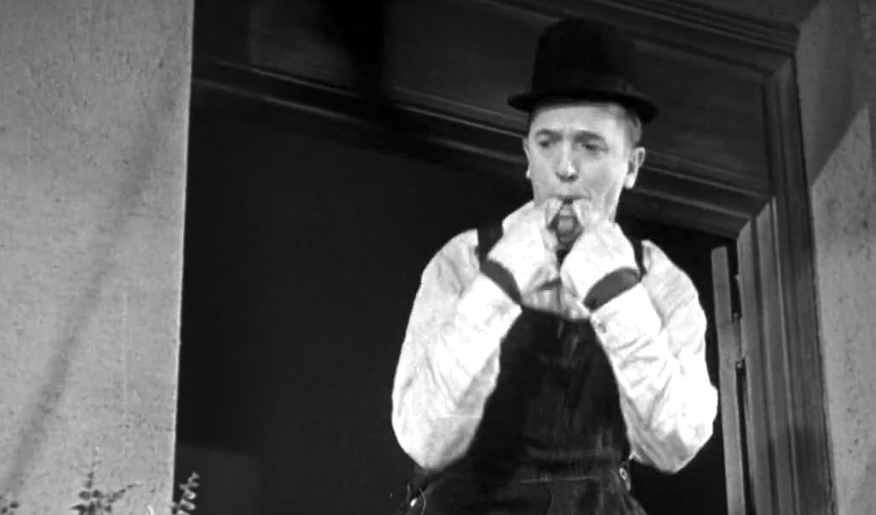
Arthur Stanley Jefferson was born on June 16, 1890, in Ulverston, Lancashire, England, into a family where theater was a daily staple. His father managed cinemas in northern England and Scotland, and young Arthur breathed the air of the stage from an early age. At sixteen, he debuted at the Britannia Panopticon music hall in Glasgow, beginning a path that would lead him to become Stan Laurel, half of one of the most famous comedy duos in film history.
In 1909, he joined Fred Karno's company, where he served as a substitute for Charlie Chaplin. Three years later, he traveled to the United States with Karno’s troupe, expecting a temporary tour, but America became his home. He started working in vaudeville, adopted the stage name Stan Laurel in 1917, and made it legal in 1931. The cinema welcomed him the same year he changed his stage name, with the short film "Nuts in May," but it was only in 1927 that his career took its definitive direction.
His meeting with Oliver Hardy happened by chance in 1921 during the filming of "The Lucky Dog," but they did not work together until 1926, when both were under contract with Hal Roach studios. The 1927 short "Putting Pants on Philip" marked the official start of the artistic partnership that would produce a total of 107 films. The duo worked because Laurel was the creative mind, staying in the studio to discuss with writers and directors, while Hardy preferred golf and social life. They rarely saw each other off set, yet their on-screen chemistry was perfect.
Among the duo’s most representative films are "Sons of the Desert" (1933), considered by many critics their absolute masterpiece, "Way Out West" (1937), where they performed memorable dance numbers, and "Block-Heads" (1938), which showed how their physical humor worked even in feature-length films. But it was "The Music Box" (1932) that brought them the only competitive Oscar of their career, in the Best Short Subject category. The film showed Laurel and Hardy struggling to carry a piano up a long staircase in Los Angeles, an exercise in physical comedy that became iconic.
After Hardy’s death in 1957, Laurel retired from the stage. He lived in a small apartment at the Oceana Apartments in Santa Monica, and his phone number was listed publicly. He personally answered fans’ calls and gave advice to young comedians who sought him out. Jerry Lewis was one who knocked on his door, receiving suggestions for the making of "The Bellboy" (1960). Dick Van Dyke did the same, calling and then visiting him at home.
It was Jerry Lewis who pressured the Academy for Laurel to receive recognition. On April 17, 1961, during the 33rd Academy Awards, Stan Laurel received an honorary Oscar "for his pioneering work in the field of cinematic comedy." He was not well enough to attend the ceremony, so Danny Kaye accepted the statuette on his behalf. In the presentation speech, Kaye recalled how Laurel and Hardy had made the world laugh for twenty-four years, from 1926 to 1950, and how their comedy reflected the human condition: ridiculous, frustrated, deeply troubled.
In a letter written nine days before the ceremony, Laurel confessed to a friend that he was "very excited" about the award, calling it "so unexpected." The Oscar arrived when his career was behind him, when Hardy was gone, and when he himself was too ill to enjoy the moment. Stanley Kramer had offered him a cameo in "It’s a Mad, Mad, Mad, Mad World" (1963), alongside Buster Keaton and the Three Stooges, but Laurel declined. He did not want to be seen on screen in old age, especially without Hardy by his side.
Stan Laurel died on February 23, 1965, in Santa Monica, leaving a legacy of nearly 190 films. In 2005, a British ranking of "Comedians’ Comedian" placed Laurel and Hardy first among the best comedy duos and seventh overall. In 2019, a panel from the Gold television channel crowned him the greatest British comedian of all time. In Ulverston, his hometown, a bronze statue of the duo was unveiled in 2009.
His last film appearance dates back to 1951 with "Atoll K."