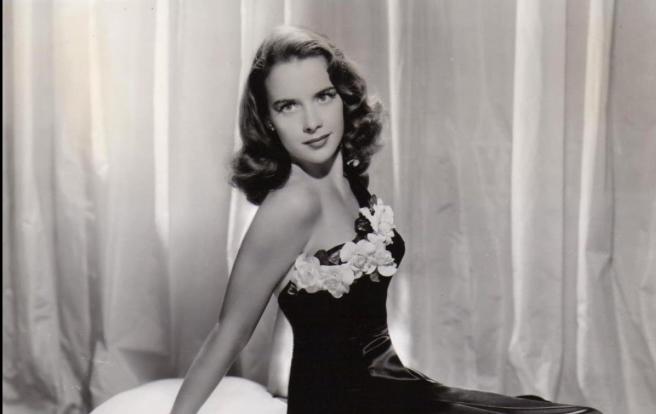
On October 23, 1952, a thirty-one-year-old actress died in a California hospital. The death certificate listed chronic renal failure and bronchial pneumonia, but her doctor, Dr. Manchester, said something more unsettling: “I felt she had lost the will to live.” Susan Peters had stopped eating; her body had wasted away until it was as fragile as tissue paper. Seven years earlier, she had been one of MGM’s brightest prospects, with an Oscar nomination and a contract promising decades of career ahead. Between those two moments lay a shotgun accident, a wheelchair, and a battle against an industry that didn’t know what to do with an actress who could no longer walk.
Peters’ professional story begins with pragmatic calculation. Suzanne Carnahan, raised in Los Angeles after her father died in a car accident, wanted to study medicine. At fourteen, she worked part-time to help support her family. Becoming a doctor required seven years of study—too long for a girl who needed to earn money immediately. Acting was a faster alternative. A Warner Bros. scout noticed her during a theater class at Hollywood High School in 1940. She gave herself three years: if she didn’t succeed, she would use her savings to return to college.
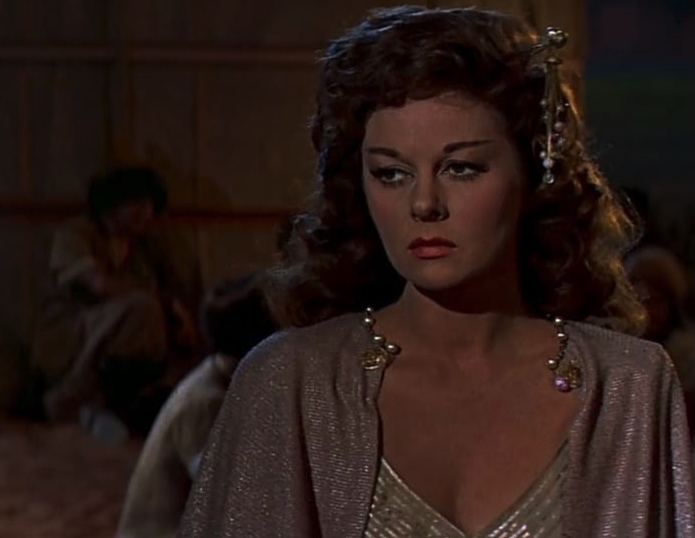
The first two years were disappointing. Uncredited appearances, small roles in films like Santa Fe Trail with Errol Flynn, and a stage name imposed by the studio. In 1942, Warner decided not to renew her contract. It seemed her backup plan was about to activate, but MGM called her for Tish and then for Random Harvest, directed by Mervyn LeRoy. The film told the story of a man with amnesia, played by Ronald Colman, and Peters had to show her character’s growth from adolescence to maturity. The performance worked. The Academy nominated her for Best Supporting Actress in 1943, competing against Teresa Wright for Mrs. Miniver, who won. The National Board of Review included her among the year’s best actresses.
MGM had found its new face of the American girl. Peters didn’t drink, avoided Hollywood parties, and loved swimming and horseback riding. At fourteen, she had already trained horses to earn money. The studio’s publicity department contrasted her with Lana Turner, her friend and colleague known for romantic escapades. Peters was the opposite: married to actor Richard Quine in November 1943, athletic, reserved. Between 1943 and 1945, she starred in Young Ideas, Assignment in Brittany, Song of Russia with Robert Taylor, and Keep Your Powder Dry. Her career was progressing according to the studio’s plans.
On January 1, 1945, during a hunting trip near San Diego, a shotgun blast injured her spinal cord. She was twenty-three. MGM wanted to reshoot The Outward Room, which she had just completed, to incorporate the accident into the plot. Peters convinced Louis B. Mayer not to do it. In the following months, she refused numerous roles she considered overly sentimental or patronizing. She didn’t want to play paralyzed girls who inspired pity. She wanted a complex, ambiguous character that didn’t make disability the story’s center.
It was actor Charles Bickford who brought her The Sign of the Ram, a novel by Margaret Ferguson about a poetess in a wheelchair who manipulates and dominates her family. Leah St. Aubyn was a villain, not a victim. Peters saw in the character something others missed: “It’s the fear of being alone” that makes her domineering. The project took shape thanks to her agent Frank Orsatti and director Irving Cummings, who wanted to become a producer. They founded Signet Productions and signed a deal with Columbia. Peters received 33% of the profits. “It seemed more sensible than making a film for a simple salary, considering income taxes,” she explained.
Filming began on July 8, 1947, directed by John Sturges. Glenn Ford, Evelyn Keyes, Larry Parks, Cornel Wilde, and Ginger Rogers welcomed her on set. Peters knew what to expect: “They’ll come to see how I look in a wheelchair. If I can make them leave thinking I’m an actress, I’ll be satisfied.” The production was exhausting. She had to have either her husband or her aunt Mary Carnahan, a registered nurse, with her throughout filming. She portrayed Leah with a cold, manipulative intensity, devoid of self-pity. The film was released in March 1948 and was a commercial failure. Bosley Crowther of the New York Times called it “charlatanry” and accused Sturges of turning Peters into “an alabaster doll.”
In September 1948, she divorced Quine. She had asked for it, convinced it was better to separate before their son was old enough to suffer. Quine feared people would think he had abandoned her and clarified to Louella Parsons that the divorce was Susan’s idea.
Theater became her new frontier. In 1949, she debuted at Hollywood’s Ivar Theatre in Tennessee Williams’ The Glass Menagerie, playing Laura Wingfield. The play was modified to allow her to perform in a wheelchair. She received a spontaneous standing ovation led by Richard Quine, which surprised her. “I never would have had the courage to go on stage if I hadn’t been paralyzed,” she said. She took the show on tour along the East Coast, including Cape Cod. She followed with The Barretts of Wimpole Street, playing Elizabeth Barrett Browning, also disabled. The production played in Princeton, Cincinnati, and Philadelphia. Plans for a Broadway revival were canceled because it was too demanding.
In March 1951, NBC-TV offered her a fifteen-minute daytime soap, Miss Susan. She played a wheelchair-bound lawyer who solved others’ problems. In December 1951, she suffered a relapse and had to leave the series to enter a sanatorium. She announced an engagement to Army Colonel Robert Clark, but plans were canceled. She worried about her declining health and broken engagement.
In 1952, she retired to her brother’s ranch in Lemon Grove, California. She entered a hospital in Exeter for a skin graft. She had lost a lot of weight. In August, she felt better and planned to return to theater with The Barretts of Wimpole Street, but couldn’t regain weight. She continued to deteriorate, developing anorexia nervosa. On September 23, she told Dr. Manchester, “I’m terribly tired. I think it would be better if I died.”
Susan Peters’ film career lasted less than twelve years, but her Oscar nomination for Random Harvestremains a testament to the talent she showed before the accident. The Sign of the Ram, despite its commercial failure, represents one of Hollywood’s earliest attempts to portray disability without sentimentality, with a complex and morally ambiguous character. Her theatrical performances in The Glass Menagerie and The Barretts of Wimpole Street demonstrate the courage with which she faced her later years, refusing to be reduced to a symbol of inspiration or tragedy. She died before seeing how much her struggle would anticipate discussions about disability representation in American film and theater.

.jpg)
.jpg)


.jpg)