Hannah Shealy is Creator, Showrunner, Director and Lead Actress in TV series Birth is For P*ssies.
Welcome, Hannah Shealy. How did you strike a balance between directing and playing the role of Maya, the lead doula? Was there ever a moment when these two roles conflicted during filming?
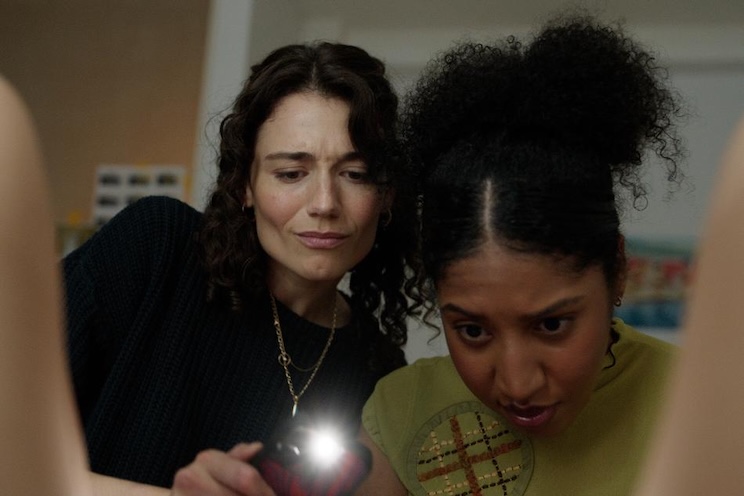
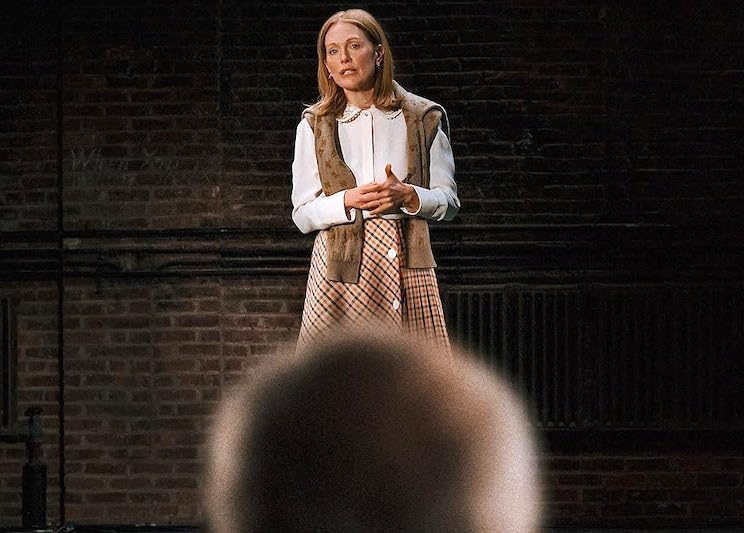
I come to filmmaking as an actor first, so directing the other actors while shooting felt quite natural. Being in the scene with them meant I was living the performance in real time, rather than watching it from the outside. I'm also not the kind of actor who needs to inhabit the character at all times, I could quickly switch between acting and being Hannah again. What I couldn't do was watch the monitor. We shot the entire pilot in three days, which meant I couldn't always take the time to watch playback for every scene. That's where my co-director Celine Sutter was essential. We had built enough trust that in the moments where I genuinely couldn't tell if we had it, she was the one to say we need another take or pull me aside with a specific note for one of the actors. It became its own kind of creative intimacy, actually.
The choice to portray childbirth through the eyes of a novice doula is bold. What inspired you to explore this particular perspective, and how did you build the emotional authenticity of such an intimate experience?
This pilot came directly out of my own experience as a working birth doula in New York City and out of frustration with how birth is usually represented in media. Often in film or TV, birth scenes follow the same imagery: a woman flat on her back, screaming, water dramatically breaking, and a doctor swooping in to save the day. It's both a cliché and a lie, and I think it does real harm — it shapes how people expect and experience birth before they've ever been in a delivery room. Many of my real birth clients say the only thing they know about birth is from the movies. So of course they come to birth with a lot of fear, most movies portray it in a horrific way.
But the births I've attended, while intense at times, have so much more nuance to them. There are long quiet stretches between contractions that have so much life and story happening. In the film I purposefully wrote it to never actually show a baby being born. I wanted to focus on all the moments leading up to that and center the people giving birth as the interesting part of the story: every type of person from every income level, race, and culture gives birth. Then there's the doula's interior life: these people hold enormous space for one of the most significant moments in someone's life, yet Hollywood has mostly used them as the butt of a joke. It's time we tell more honest birth stories, and I believe the most interesting way to do that is through the eyes of doulas. The novice perspective was the way in — Maya doesn't know what she's doing yet, which means the audience discovers this world with her.
The title itself is provocative and ironic. How important is it to you that the film’s comedic tone doesn’t diminish the depth of the experience you’re portraying?
The title actually came from a tote bag I was given at my very first doula training. It's a phrase that circulates in doula and birth worker spaces online and I felt like it captured how I want the show to feel: empowered, a little cheeky, and completely unafraid to lean into uncomfortable topics. And the comedic elements are very purposeful beacuse it's true to life: birth is sometimes funny and absurd and chaotic, and I think the impulse to scrub that out in favor of pure drama actually does a disservice to us all. I believe comedy is only funny when it's truthful and depth and comedy are closely related. So the question for me was never how to protect the depth from the comedy — it was how to be honest enough that both could exist in the same breath, the way they do in real life. I want anyone who has given birth, or been in that room, to watch this show and feel genuinely seen. I also wanted them to feel proud of themselves. Giving birth is punk rock — it's one of the most extraordinary physical feats a human body can accomplish, and it deserves to be cheered and celebrated as loudly as it's reverenced.
You co-directed the short film with Celine Sutter. How did you divide creative responsibilities, and how did this collaboration influence the film’s final vision?
Independent filmmaking is a hyper collaborative environment with limited resources, so as collaborators Celine and I wore many hats. Communication was very important and we would both jump in to do anything needed along the way. I call Celine my "filmmaking doula" because she was patient and guided me through the process as I was learning. Film is an entirely collaborative medium and I was really moved to see how deeply community driven it was in that sense. I'm so proud of both the way Celine and I worked together but also how generous the whole cast and crew was to give more than they probably normally would on a larger budgeted project. It was all hands on deck.
The film explores the theme of female support during a moment of extreme vulnerability. What aspects of this dynamic were you interested in bringing to the screen that we rarely see represented?
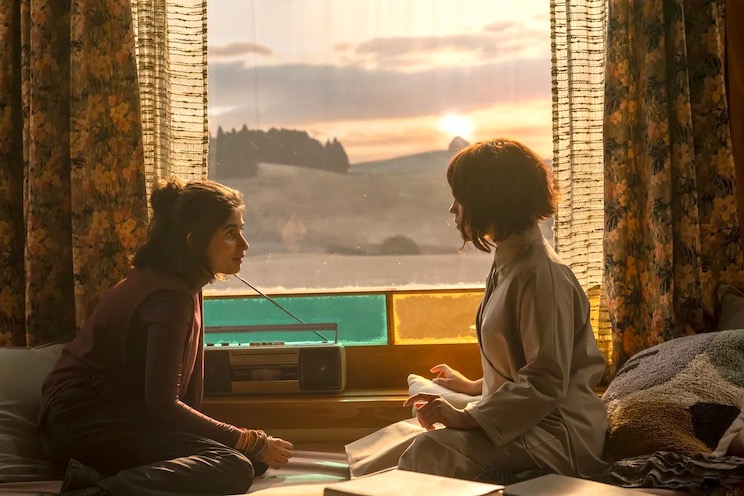
For most of human history women supported each other through birth in a deeply communal way. However, as birth became medicalized in the 20th century, that thread of support and knowledge began to disappear when the obstetric model took over. Doulas have appeared to fill in that gap and I wanted to give a more intimate and accurate glimpse of one version of what that support literally can look like. We really see this come to a head in the film when Maya helps Celeste through intense contractions allowing Celeste to let down her guard and share something deeply vulnerable with Maya, even though they are basically strangers. As a doula, I experience that depth of intimacy at every birth, and it is deeply humbling to serve as that safe harbor for these women during labor.
The media has done a real number on the public's understanding of what doulas actually are. The tropes are so embedded at this point that I constantly meet people who have no idea what a doula does, or who picture something vaguely mystical and woo-woo, only for homebirths etc. I wanted to show what that support looks like in practice — specific, grounded, sometimes unglamorous, often profound.
And I want to highlight that this is not exclusively a female story, because men need doula support just as much as women do. It's baffling to me that we expect male partners to somehow intuitively know how to support someone through labor— an experience they've never had, in a body they don't have, with physiology they were likely never taught. That's not fair to them, and it's not fair to the person giving birth. Doulas are trained professionals there for the whole family. Everyone in that room benefits from having someone who knows what's going on. As a TV series, that gives space for a much bigger story than we've seen before: it includes all of us, and is endlessly rich to explore.


.jpeg)